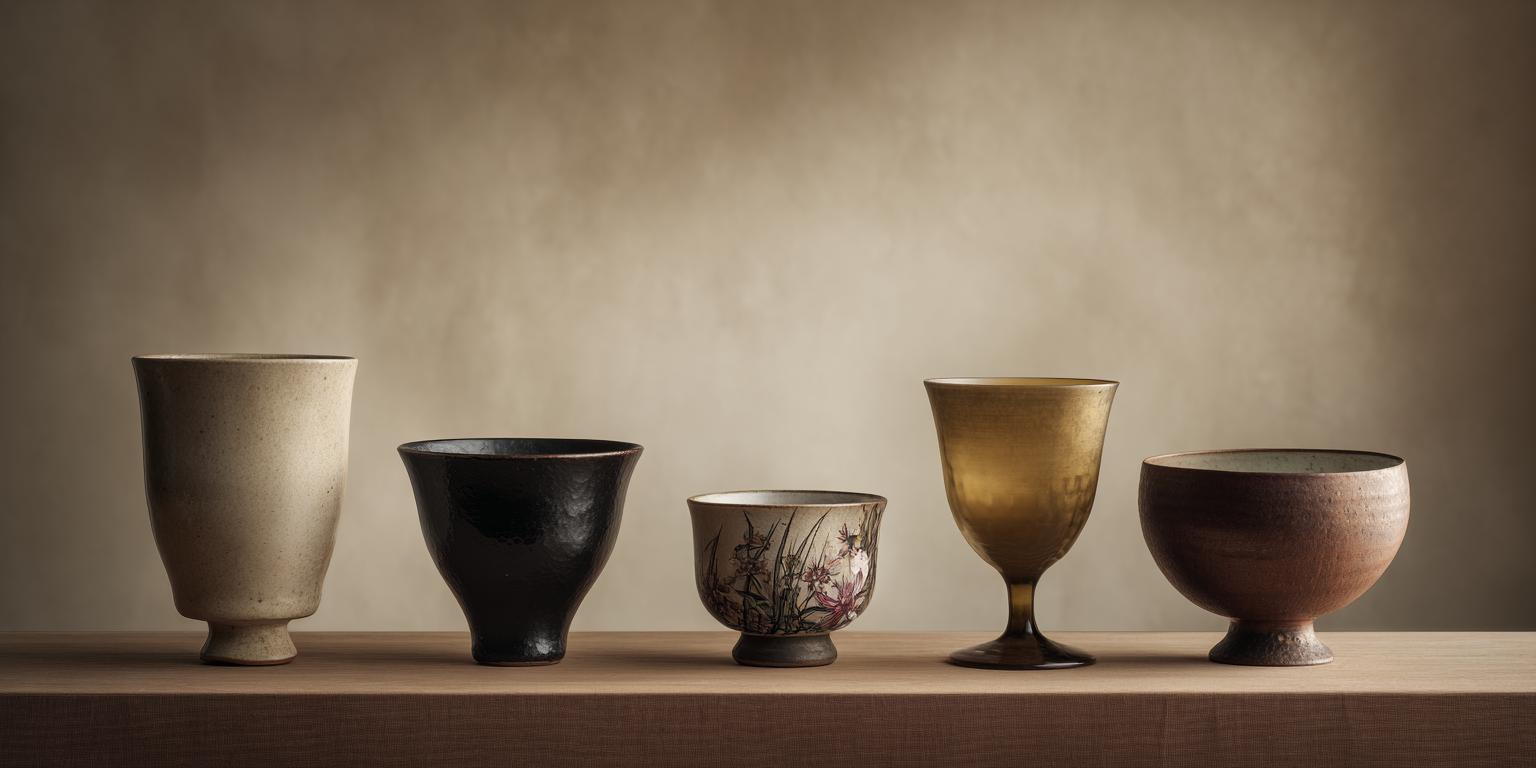
Everywhere tea is poured, its own logic of shape, action, and etiquette emerges. Sometimes it’s about retaining warmth, sometimes about showing color, sometimes about being able to carry it with two hands. Think of this as a small world trip for your kitchen cupboard — you don’t have to collect anything, just look: what does this cup do to the moment?
Japanese chawan (bowl)
A bowl that gives space: to movement, to aroma, to attention. Traditionally known for matcha, but also beautiful for a botanical infusion you want to carry calmly in your hands. At-home tip: choose a chawan with a slightly thicker wall for warmth and a soft drinking rim.
Chinese teacup (small, without handle)
Small cups invite slow tasting: a few sips, pause, possibly top up. The size almost automatically forces you to pay attention. At-home tip: serve an intense infusion in a smaller volume — you taste more, without it becoming “a lot.”
Tibetan tea bowl
A sturdy, simple bowl shape that suits tea that truly warms and nourishes in experience (think rich, creamy, or savory traditions). At-home tip: ideal for herbal infusions with body: steep a little longer and drink calmly, with both hands around the bowl.
Russian tea glass with holder
Glass in a metal holder is typically practical and ceremonial: you see the color, but your hands stay protected. At-home tip: if you like drinking from glass, a holder or thick glass wall is pleasant (especially with hot infusions).
Porcelain cup with saucer
The classic duo: cup and saucer. The saucer brings calm (a place for a spoon, drips, a small cookie), and porcelain feels precise. At-home tip: perfect for light, floral, or citrusy blends where you want to preserve clarity.
Moroccan tea glass
Small glass, often richly decorated. It shows color and shine and suits pouring with flair. At-home tip: beautiful with mint and other fresh botanicals — but be practical: glass gets hot, so pour a bit more slowly and hold the glass lower down.
Turkish tulip glass
Tulip-shaped, slender, designed to show color and conduct warmth in a pleasant way. The waist helps with holding. At-home tip: if you like stronger cups: choose this glass for a shorter, powerful brew — small glass, lots of flavor.
Indian kulhar (clay)
Unglazed clay feels earthy and tactile. The cup itself carries atmosphere: warm, simple, direct. At-home tip: preferably choose a reusable, well-fired version and rinse immediately after use; clay absorbs odors quickly.
The mug (everyday, but not boring)
The mug is the comfort cup: big, sturdy, forgiving. If your ritual mainly needs to feel “at home,” this is often the best base. At-home tip: choose a mug with a slightly thinner rim if you’re looking for refinement, or thicker if you want warmth and calm.