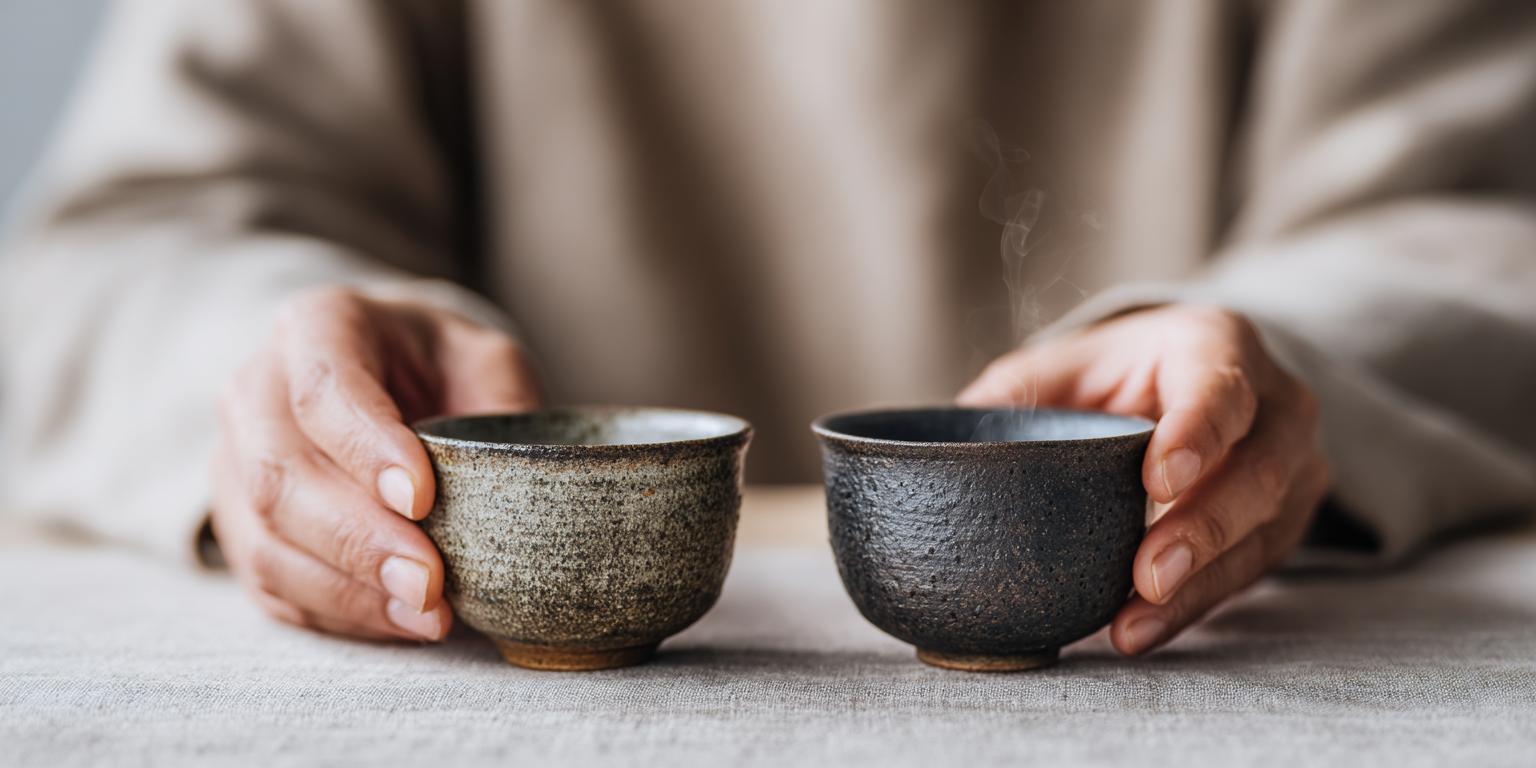

The tasting ritual: how to make flavor visible
Appreciating flavor doesn’t start with a “good nose,” but with calm and repetition. Tea is fleeting: many aromas are in the steam and disappear quickly if you’re in a hurry. So give yourself one fixed way of tasting. Then differences become recognizable on their own.
What you taste comes from three places
- Nose (smell): this is where the complexity lies. Smell before your sip and while you sip.
- Tongue (basic tastes): mainly sweet, sour, bitter and umami. (Salt usually plays a smaller role in tea.)
- Mouthfeel: body, astringency, tingling, cooling or warmth. You feel this just as strongly as you taste it.
Taste in three sips
- Smell: lift the lid or the rim of your cup for a moment and breathe in calmly. Look for one word.
- Taste: take a small sip and let the tea roll over your tongue. A gentle “slurp” (drawing in air) makes aromas clearer.
- Wait: swallow and pay attention to what lingers. Aftertaste is often the most recognizable signal.
Tip: don’t taste it piping hot. Let your cup cool down a bit until warm. That’s when details come up.
Make sure your cup is comparable
Recognizing flavor is easier if you keep one variable constant: the same dosage, the same steeping time, the same type of cup. If you want a guideline for that, use a fixed brewing baseline and only deviate after that. Our brewing guide helps you create a clear, consistent base.