Maison Tisane
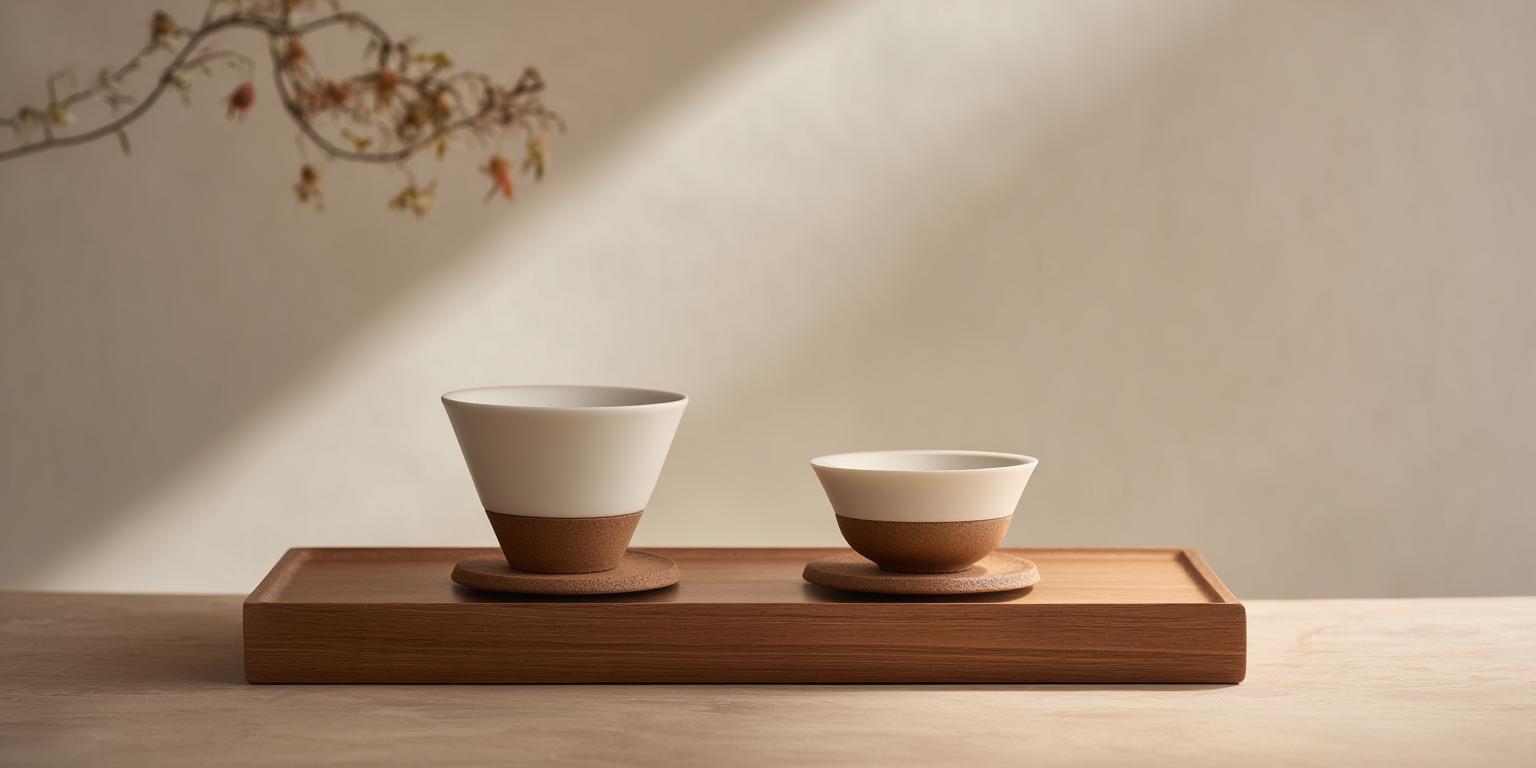
Cupping at home (hero image)

Cupping at home

A calm tasting ritual for more nuance — aroma, color and mouthfeel in one cup.

Cupping as a professional: this is how you taste tea and blends at home

Professional tasters use cupping to evaluate tea fairly: fixed dosage, fixed time, fixed method. Thanks to that repeatability, noise disappears and aroma, taste and mouthfeel remain. At home you can do the same with a few small cups, a spoon and a timer — also with botanical infusions. You learn to adjust more quickly for water, temperature and steeping time, and your tasting notes become sharper with every session.

Many cups are simply made: water that boils over, a random spoon measure, and meanwhile there’s perfume, coffee, or breakfast nearby. Then you mostly taste circumstances, not the plant. With cupping you keep everything the same and taste consciously in layers: first the dry botanicals, then the steam, then a solid slurp that spreads the flavor across your whole tongue, and finally the wet leaf. The difference between fresh, floral, spicy, or earthy suddenly becomes clear, without it having to be complicated.

Line up the cups, get your notebook ready, and take one calm breath before you taste. The difference is rarely in tricks, but in attention.

Cupping as a tasting ritual

Cupping is the way tea tasters taste when they want to compare: not “drink something tasty,” but consciously looking, smelling, and slurping to sharpen differences. The nice thing is that you don’t need anything complicated for this at home. Just a small shift in attention: you don’t only taste the cup, you also taste the structure of the flavor.

When cupping really helps

  • If you want to taste three blends or teas side by side (a flight).
  • If you want to understand why one cup feels bright and the other dull.
  • If you want to learn to recognize aromas without immediately needing to have words for them.
  • If you want to practice taste appreciation in a calm, sober way.

Tasting set for home

Professionals use white tasting bowls and a small cup with a lid. At home you translate that easily: small, white cups, something to cover them, and a way to pour clearly. The goal isn’t luxury tools, but consistency.

You need

Basics

  • 3 cups per person (or 2 if you want to start small)
  • Timer (phone is fine)
  • Notebook or loose cards
  • Hot water (preferably neutral/filtered)

For tasting

  • A saucer or lid to cover
  • A fine tea strainer to pour clearly
  • A teaspoon or small scale to dose evenly
  • Almonds or pumpkin seeds (to neutralize between tastings)

Small rule that makes everything easier

Set everything up the same. Same cups, same water, same dosage, same time. Only then do you taste the difference between the blends or teas, instead of the difference between your actions. For your daily cup there is more freedom; for cupping, repeatability is the point. (If you mainly want to learn to brew better: see also the infusion ritual.)

No perfume

Preferably don’t wear any scent (perfume, scented candle, room spray). Cupping relies heavily on smell. If your nose is “full,” half the experience is lost.

The cupping method step by step

Here is a home protocol that stays close to professional tasting, but is friendly enough for your own kitchen table. You can use this for both tea and botanical blends. Just choose one route per round, so you’re tasting apples to apples.

Route A: tea

2 g per 100 ml
Water: 80–95 °C (depending on type)
Time: 4–5 min

Route B: botanical blend

3 g per 200 ml
Water: ± 90 °C
Time: 8 min (covered)

Tip: tasting a flight? Stick to one route per round. If you want to compare tea and botanicals, do two rounds (otherwise differences in extraction will come into play).

1) Look at and smell the dry leaf

  • Color & shape: whole leaf, broken leaf, flowers, seeds, root pieces.
  • Dry aroma: smell briefly, not too long. What stands out immediately?
  • Warm your cup briefly: pour hot water into the cup, swirl, pour out. That makes aroma “open up” faster.

2) Dose, pour, cover

  • Put your weighed dose into each cup. Label them (A, B, C) to avoid confusion.
  • Pour the same amount of water into each cup, calmly.
  • Cover with a saucer or lid and start your timer.

Feel free to listen too: with some leaves you can hear a small “unfolding” as soon as the water hits them. It’s a detail, but it sharpens your attention.

3) Smell the steam and the wet leaves

Lift the lid briefly and smell above the cup (not with your nose in the steam). Then you can turn the lid over and briefly smell the condensation: that’s often where the top aromas are.

4) Pour clear and look at the color

  • Pour through a fine strainer into a second cup (or back into the same cup, if you hold the leaves back well).
  • Look at clarity and color: straw yellow, gold, greenish, amber, reddish-brown.
  • Smell again: now without steam, aroma is often more specific.

5) Taste with a small slurp

Yes: slurping. Not for the sound, but because you bring in air and the liquid spreads more broadly over your tongue. Taste in three moments: first impression, middle (body/mouthfeel), finish (what lingers?). Let the tea cool a bit; too hot makes flavor flat.

Tasting with five senses

Cupping sounds technical, but it’s actually very human: you bring all your senses into alignment. Once you feel that, tasting naturally becomes calmer and more precise.

Seeing

Look at shape (whole or broken), color of the dry leaf, and later the clarity of the infusion. Clear isn’t necessarily “better,” but it is information.

Smelling

Smell dry, smell wet, smell the lid. Aroma is often faster than taste. A blend can smell floral but finish spicy.

Hearing

It’s subtle, but you hear water boiling, gentle pouring, leaves opening. It helps you slow your pace.

Feeling

Mouthfeel is often the difference between “tasty” and “special”: light, round, creamy, astringent, dry, oily. That’s not a judgment, just observation.

Tasting trick: exhale after your slurp

Take a slurp, swallow, and then calmly exhale through your nose. That’s the moment when aromas “come back” and you find words faster.

Notes you’ll actually use

Good tasting notes don’t have to be literary. One sentence per cup is often enough. The goal is that next time you recognize faster what you’re looking for (or want to avoid).

Write this down (no more is needed)

  1. Dry: what do you smell immediately?
  2. Wet leaves: does it change? Does it become greener, spicier, deeper?
  3. In the cup: 3 words for flavor + 1 word for mouthfeel.
  4. Finish: short or long? Fresh, warm, bitter, sweetish?

Words that often work

If you get stuck, choose from a few calm families: floral, citrus, spicy, green, resinous, roasted, earthy, honey-like. Your taste vocabulary grows naturally if you keep it simple.

Want to go deeper? In Taste appreciation we go further into recognition, combinations, and how to build your own language of preference.

Common pitfalls

If cupping “doesn’t work,” it’s rarely your taste. Usually there’s one variable that’s playing too big a role. Change only one thing at a time; then you learn quickly.

Everything tastes the same

  • Work with small volumes (100–200 ml) and equal dosing.
  • Let it cool a bit; too hot makes differences flat.
  • Neutralize in between (water, almonds/seeds).

Harsh, bitter, or astringent

  • Lower the temperature by 3–5 degrees.
  • Shorten the time by 30–60 seconds (tea) or 1–2 minutes (botanicals).
  • Don’t stir and don’t press; pour through calmly.

Too light or watery

  • Increase dosage (small step: +0.3 to 0.5 g).
  • Extend the time by 1 minute.
  • Always cover during steeping.

Cloudy or “dusty”

  • Use a finer strainer.
  • Give leaves/botanicals more room (don’t cram).
  • Work calmly: don’t shake, don’t stir.

Remember: cupping is a measurement moment. For your daily cup it can be gentler and freer. If you want to improve that daily cup, start with water and temperature in our brewing guide.

Keep it small: three cups, one timer, one sentence per cup. That’s already enough to train your sense of taste. And if you repeat it weekly, you’ll notice something special: you don’t taste “better” by trying harder, but by becoming calmer. Cup by cup.

Contact

Reach us via chat
Chat WhatsApp
9am-6pm on working days
Reach us by email
E-mail contact@maisontisane.nl
Response usually the same working day
Reach us by phone
Call 040 – 240 5807
9am-6pm on working days

Create your own

Blendstudio Workshops

Inspiration

Botanicals Tea Blog

You can shop safely with us

You can shop safely with us (Webwinkel Keurmerk)

Pay securely with:

iDEAL VISA Mastercard American Express Riverty PayPal

Shopping Cart

( )

Your cart is empty

Total

Shared cart

Someone has shared a cart with you. Would you like to add these products to your cart?

Total