Maison Tisane
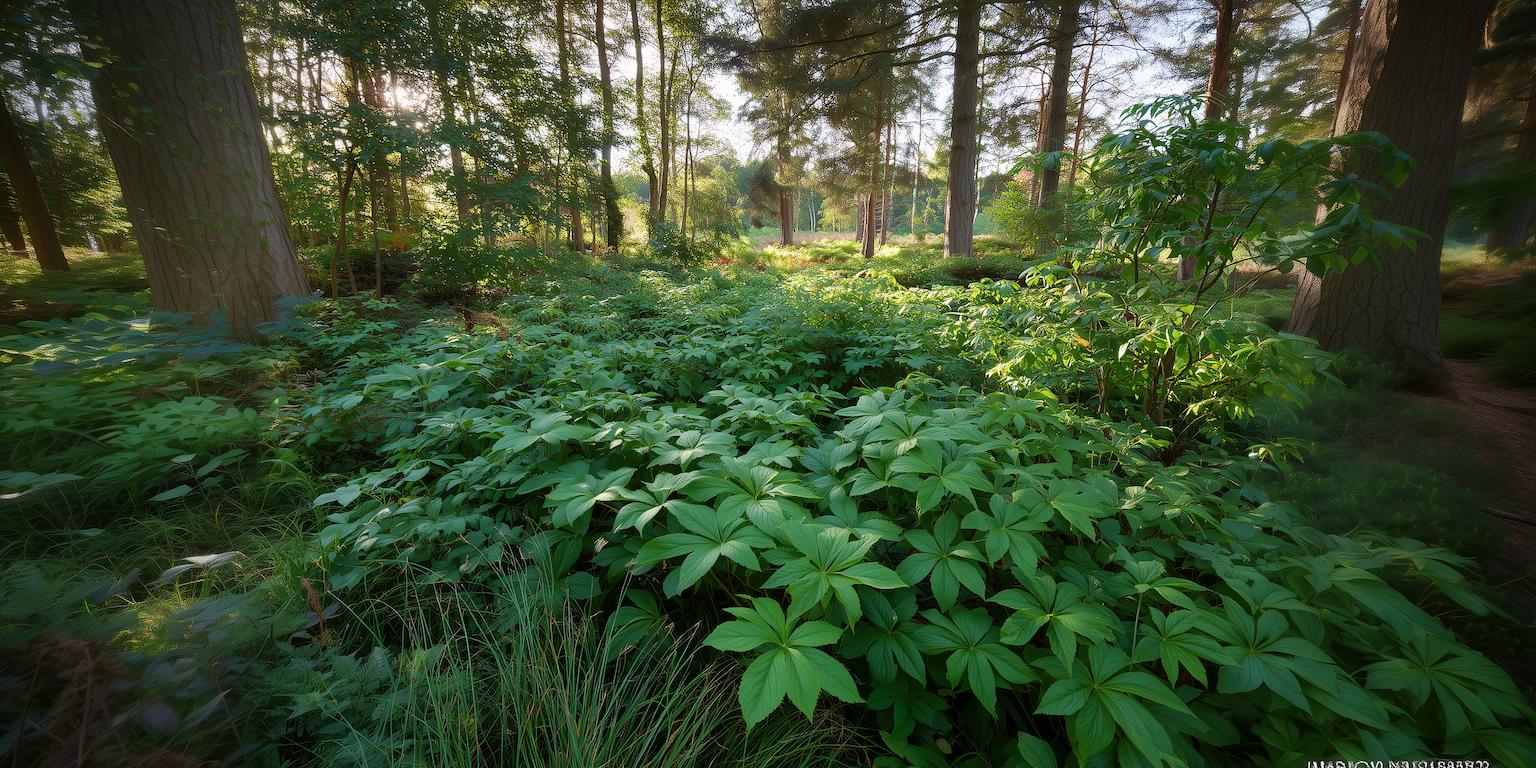
The Eleutherococcus senticosus, pure and in full growth (hero image)

Botanical cuisine

Siberian ginseng

Eleutherococcus senticosus

Why we love this botanical

Siberian ginseng yields an amber-colored infusion with a dry, rooty perfume of wood, bark, and mild spice. In the cup it shows more depth than aroma: an earthy opening, a bitter accent, and a long, almost forest-like finish that lingers warmly. The texture is lean but steadfast, with a restrained strength that does not rely on sweetness, but on structure, tension, and a quiet, spicy firmness.

In botanical compositions, this root acts as a backbone. It gives direction to soft flowers, keeps fruity notes in check, and lends spicy or roasted accents more depth. That makes it interesting in blends for cooler seasons or the morning, where a firmer foundation is desired. With peels, spices, and other roots it builds layering; with leaf and blossom it brings contrast, seriousness, and a mature line in the top.
Habitat & Origin

Siberian ginseng originates from the cool forest regions of Northeast Asia, particularly from the Russian Far East, North China, Korea and parts of Japan. The shrub grows along forest edges, on wooded slopes and in mixed deciduous and coniferous forests, where humus-rich, well-drained soils and cold winters determine the growth rhythm. Due to snow cover and slow spring warming, the plant develops slowly, which suits its compact, woody root character. For use, mainly the root and rhizome are harvested, usually when above-ground growth comes to rest. It is precisely that slow growth and the cool landscape that give the botanical its earthy depth, dry bitters and restrained resinous note.

Active compounds

The profile of Siberian ginseng is often described through eleutherosides, supplemented with lignans, phenylpropanoids, coumarins and polysaccharides. These substances explain not so much an exuberant perfume as the dry, woody bitterness, the slight resin accent and the long aftertaste of the root. When dried, the profile becomes more compact and more austere; a longer, hot extraction or short decoction mainly brings out the earthy depth and the bitter structure.

Ayurvedic approach

Siberian ginseng does not belong to the classical Ayurvedic herbs from the ancient Sanskrit sources, but in contemporary herbal interpretations it is sometimes placed alongside other tonic roots. The energetic impression is generally mildly warming, drying, and activating, which is why the plant is associated more with kapha and, to a lesser extent, with vata than with pitta. In broader Asian traditions, the root is mainly known as a supportive forest root for periods of exertion, cold, and seasonal transition.

Thermal energy (Virya) light heating

Pitta

neutral

Increasing Balancing

Effect: neutral

Vata

Balancing

Increasing Balancing

Effect: light balancing

Kapha

Balancing

Increasing Balancing

Effect: strong balancing

Dosha’s & tea
Ayurveda

Tea Blog

Dosha’s & tea

What Ayurveda understands by Vata, Pitta and Kapha — and how that provides direction for tea.

Read the article

Flavour profile & Blending

Intensity

Strong

Accessibility

Accessible

Character

lingering, earthy, bitter

Role in the blend

Firm herb (5–10%): provides structure and body to the blend without overwhelming it.

The indicated percentage refers to the approximate weight proportion of this herb within the total blend, but it can of course be adjusted to give the herb a more dominant or more subtle role.

In teas and herbal blends, Siberian ginseng mainly works as a backbone and structure provider. It combines nicely with ginger, cinnamon, cardamom, chicory, licorice and orange peel, because its dry root note adds warmth and length. Alongside rosehip or hibiscus it keeps the composition firm; alongside flowers and mild leaves it brings seriousness, depth and an earthy finish.

An infusion of Siberian ginseng pairs well with dark chocolate, rye bread, spiced breakfast cake, roasted pear and compotes of plum or quince. The dry bitterness tempers sweetness, while the woody undertone deepens roasted and caramelized flavors. It can also work surprisingly well alongside mushrooms, chestnut or a mild broth, precisely because of its restrained, forest-like character.

More flavour details

Selection guide (aroma directions)

Intensity
5
Freshness
0
Citrus
0
Fruity
0
Floral
0
Spicy / Herbal
4
Earthy / Woody
8

Food pairing (structure)

Sweetness
1
Sourness
0
Bitterness
7
Astringency
2
Body
4
Aftertaste length
8
Sharpness / Pungency
3
Blending notes: resinous (2/10)
Flavour appreciation
Taste

Tea Blog

Flavour appreciation

Learn to taste tea mindfully — from aroma and intensity to mouthfeel and food pairing.

Read the article

Precautions

Naturally uplifting. Less suitable late in the day or if you are sensitive to restlessness.

Experience Siberian ginseng

Discover the versatility of this botanical in our blends, or use it as the foundation for your own creation in our Blendstudio.


Contact

Reach us via chat
Chat WhatsApp
9am-6pm on working days
Reach us by email
E-mail contact@maisontisane.nl
Response usually the same working day
Reach us by phone
Call 040 – 240 5807
9am-6pm on working days

Create your own

Blendstudio Workshops

Inspiration

Botanicals Tea Blog

You can shop safely with us

You can shop safely with us (Webwinkel Keurmerk)

Pay securely with:

iDEAL VISA Mastercard American Express Riverty PayPal

Shopping Cart

( )

Your cart is empty

Total