Maison Tisane
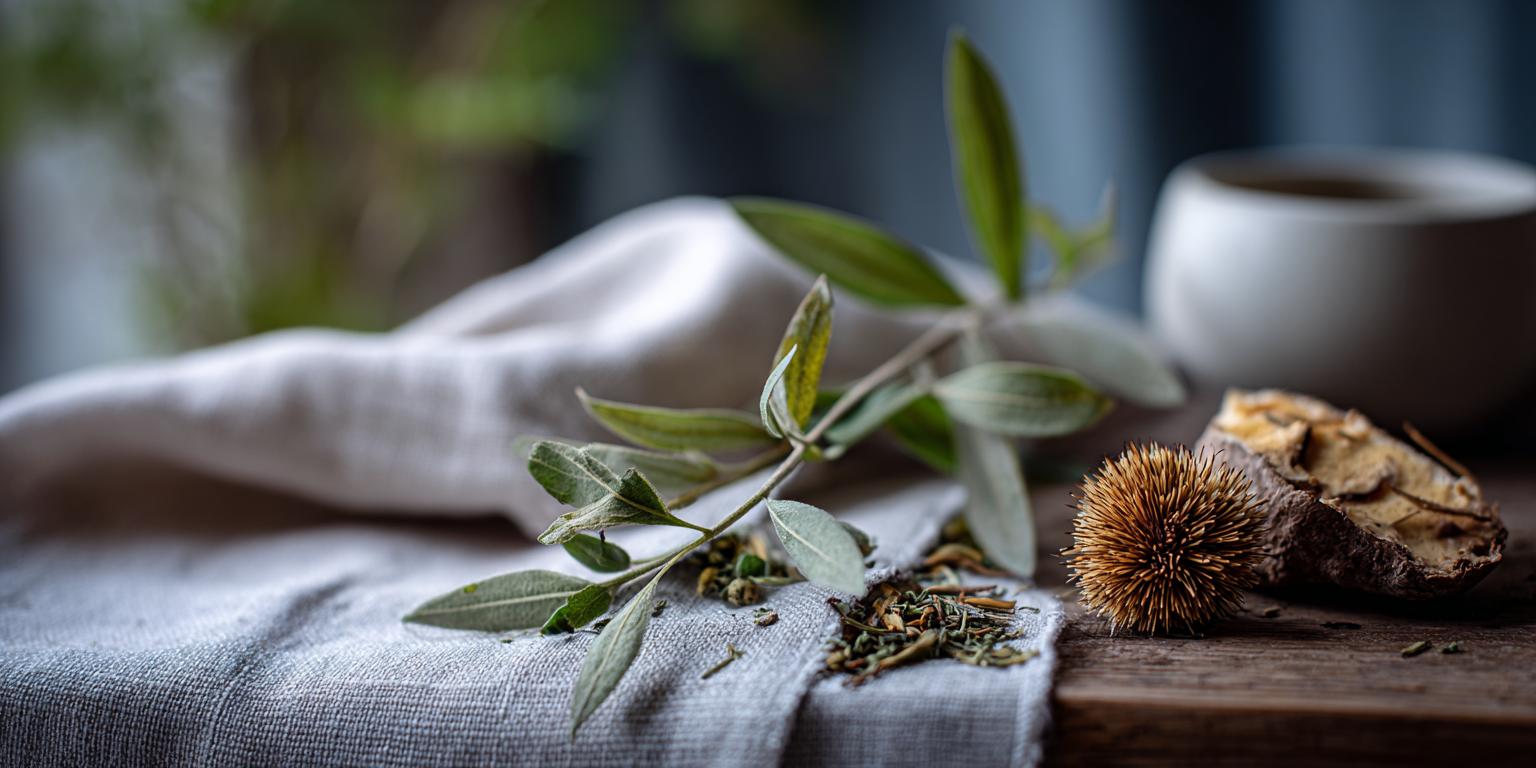
Plant parts (hero image)

Plant parts

From leaf to root — this is how plant parts provide flavor, texture and serving advice.

Plant parts in botanicals: this is how you filter our botanical kitchen

Which plant parts you use in a blend determines how a cup unfolds: from aroma and color to body and finish. In our botanical kitchen, we have therefore categorized all ingredients by the part of the plant we work with — so you can filter faster and combine more consciously. For each category, you’ll get a few appealing examples (with links to our botanicals), plus practical hints: when a short infusion is enough, and when it’s better to steep a little longer. That fits with how Maison Tisane works: with whole plants and leaves, without added flavorings, and with a ritual that can be unhurried.

Many people call everything ‘herbal tea’, but a leaf releases faster than a root, and a peel often requires more time and space. If you know that difference, you avoid classic pitfalls: water that’s too hot, too short a steeping time, or a blend that becomes unbalanced because one component is too dominant. Plant parts are therefore our most practical filter: they tell you something about flavor, extraction, and what you see happening in the pot.

See it as a small kitchen moment: hand in the jar, take a quick sniff, only then pour. Whoever learns to read plant parts pours with more calm — cup by cup.

The 7 plant parts in our botanical kitchen

In our botanical kitchen (knowledge base) we sort every ingredient by the part of the plant you actually use. That’s not a botanical detail, but a practical compass: different plant parts release their flavor, aroma, and structure at a different pace. Leaf releases quickly, flower is fleeting, root takes time, seed holds aroma. Looking at it this way makes blending more manageable and steeping calmer.

Why we filter by plant part

If you lump everything under “herbal tea,” you get stuck sooner: a flower that steeps too long, a root that doesn’t get enough time, or a peel that overpowers. By filtering by plant part you can see at a glance what releases quickly, what’s sturdier, and what you need to dose with care.

Leaves & soft herbs

Leaves are the plant’s working surface: thin, porous, and rich in volatile compounds. They release flavor quickly and often form the base of a blend.

  • Blend role: supportive and connecting.
  • Steeping behavior: fast extracting; too hot makes them astringent.

Examples: Nettle leaf, Lemon balm, Birch leaf, Raspberry leaf, Peppermint.

Flowers & blossoms

Flowers are meant to entice: fragrance, color, and nuance. That makes them refined, but also delicate — their aroma evaporates quickly.

  • Blend role: top notes and elegance.
  • Steeping behavior: covering is essential; slightly shorter rather than too long.

Examples: Chamomile, Linden blossom, Elderflower, Lavender, Rose petals.

Grasses & stems

Grasses and stems form the plant’s supporting framework. They contain less chlorophyll, but a lot of fiber and structure. That makes them clear in flavor and stable during steeping.

  • Blend role: lift and freshness without sharpness.
  • Steeping behavior: can handle hot water and a longer infusion well.

Example: Lemongrass — botanically a grass, used culinarily for its fresh, citrus-clean profile that adds structure without dominating.

Peels & bark

Peel protects the fruit; bark protects the tree. Both are rich in essential oils and therefore intense.

  • Blend role: sparkle or warmth — in moderation.
  • Steeping behavior: hot water, but not aggressive.

Examples: Orange peel, Lemon peels, Cinnamon.

Fruits & fruit parts

Fruits carry seeds and contain acids and sugars. They add color, roundness, and an approachable character.

  • Blend role: body and balance.
  • Steeping behavior: needs time to rehydrate.

Examples: Apple pieces, Blueberries, Rosehip, Hibiscus.

Roots & rhizomes

Roots grow downward; rhizomes are thickened underground stems (like ginger). They store energy and release it slowly.

  • Blend role: depth and backbone.
  • Steeping behavior: requires time or a short decoction.

Examples: Ginger, Turmeric, Chicory root, Licorice, Valerian root.

Seeds & pods

Seeds are compact energy carriers, often rich in oils. Pods are their protective husks.

  • Blend role: spicy accent and tension.
  • Steeping behavior: warmth and time; lightly crushing helps.

Examples: Anise seed, Fennel seed, Coriander seed, Cardamom pods.

Special cases and why we still categorize by plant part

Not every ingredient is intuitive to guess. Some botanicals are referred to differently in everyday language than is botanically or functionally logical. That’s exactly why we work with plant parts in our botanical kitchen: they tell you how something behaves in the pot, regardless of the name.

Botanically speaking, slightly different

  • Hibiscus is often seen as a flower, but what you use is the calyx around the seed pod. In the infusion it behaves more like fruit: tart, color-giving, and full.
  • Rosehip is not a flower, but the fruit of the rose — the petals have long since disappeared.
  • Black pepper is botanically a berry, but functions in blends as a seed-like spicy accent.
  • Cardamom pods are the husks; the aroma is in the seeds inside — lightly crushing makes a difference.
  • Corn silk looks like grass, but botanically is a flower part (stigma and style).

A small blending and steeping compass

  • Build layers: leaf flower fruit/peel root seed.
  • Steep in the middle: ± 90 °C and 8–10 minutes works for most blends.
  • A lot of root, bark, or seed? Give it time — or work in two phases.
  • A lot of leaf or flower? Steep more gently and taste earlier; you can always extend.

You’ll find more detail in our steeping guide and the moment compass cooling or warming.

The advantage of working with plant parts is simplicity. You don’t have to be a botanical encyclopedia: look at what’s in your hand leaf, flower, peel, seed, or root and give that part the steeping method that suits it. That’s how calm arises in the pot, and clarity in the cup.

Contact

Reach us via chat
Chat WhatsApp
9am-6pm on working days
Reach us by email
E-mail contact@maisontisane.nl
Response usually the same working day
Reach us by phone
Call 040 – 240 5807
9am-6pm on working days

Create your own

Blendstudio

Inspiration

Botanicals Tea Blog

You can shop safely with us

You can shop safely with us (Webwinkel Keurmerk)

Pay securely with:

iDEAL VISA Mastercard American Express Riverty PayPal

Shopping Cart

( )

Your cart is empty

Total