Maison Tisane
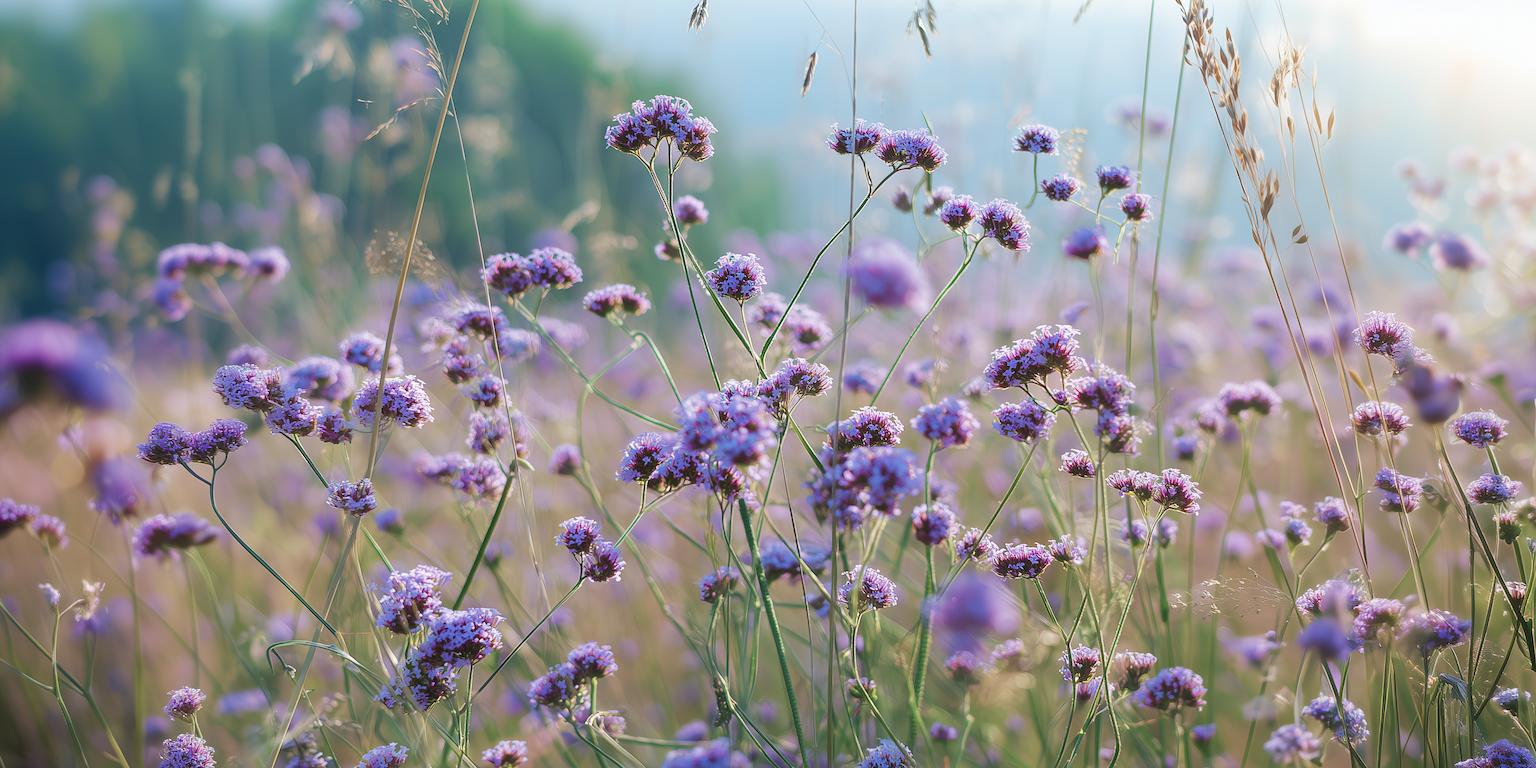
The Verbena officinalis, pure and in full growth (hero image)

Botanical cuisine

Vervain

Verbena officinalis

Why we love this botanical

Vervain produces a clear, golden infusion with a slender, green aroma reminiscent of wild herbs, young leaves and a hint of meadow bloom. In the cup you first taste freshness and a light spiciness, after which a distinct bitter note calmly unfolds. Precisely that dry, elegant bitterness gives vervain its character: slim in body, long in aftertaste and strikingly clear in line, as if the herb lets its summery landscape resonate in the cup for a moment longer.

In blends, vervain does not work as soft decoration, but as a guide. It tempers pronounced sweetness, sharpens floral and citrus notes, and connects fresh herbs with more earthy components. This makes it interesting alongside lemon balm, mint, chamomile or citrus peel, but also in small doses alongside nettle and olive leaf. Used carefully, it does not give a harsh bitterness, but a dry structure that gives a blend tension, depth and a long, clean finish.
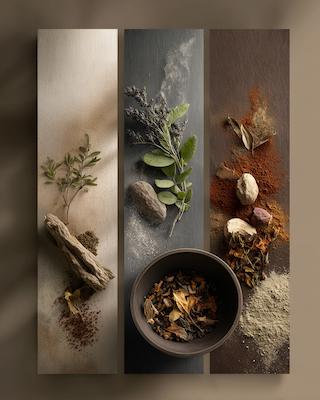
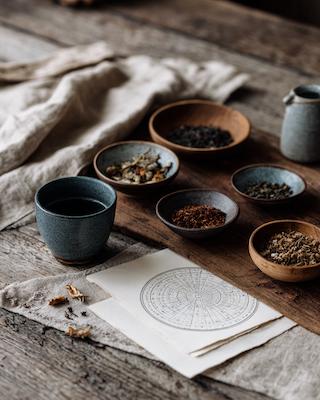
Habitat & Origin

Verbena officinalis occurs naturally in large parts of Europe and West Asia and has also long been naturalized around the Mediterranean and in North Africa. The plant likes sun, open air, and soil that is not too rich: stony verges, dikes, field edges, riverbanks, and rough paths form its familiar landscape. It readily grows on dry to moderately moist, often calcareous soil that warms up well in summer. For herbal use, the leaves and flowering tops are mainly harvested when the plant is in full growth, usually from midsummer to early autumn. Slow, airy drying preserves the green, slender aroma and keeps the bitterness clear.

Active compounds

The bitter profile of vervain is linked to iridoid glycosides such as verbenalin and hastatoside, supported by polyphenols, flavonoids and a modest amount of tannins. Together they provide the dry, green character, the slight astringency on the tongue and the long finish. When dried, the aroma usually becomes somewhat rounder and less grassy, while an extraction that is too hot or too long quickly brings the bitterness prominently to the fore.

Ayurvedic approach

Vervain does not belong to the classical core herbs of Ayurveda, but within that theory of tastes it can be well understood as cooling, lightly drying, and distinctly bitter. From that approach it aligns more with pitta and kapha than with vata. In European herbal traditions it found a place in bitter infusions, ritual herb bundles, and tisanes for the end of the day. That historical context fits its character: clear and green in tone, with a sober bitterness that creates space rather than filling it.

Thermal energy (Virya) cooling

Pitta

Balancing

Increasing Balancing

Effect: strong balancing

Vata

Increasing

Increasing Balancing

Effect: light increasing

Kapha

Balancing

Increasing Balancing

Effect: light balancing

Dosha’s & tea
Ayurveda

Tea Blog

Dosha’s & tea

What Ayurveda understands by Vata, Pitta and Kapha — and how that provides direction for tea.

Read the article

Flavour profile & Blending

Intensity

Strong

Accessibility

Accessible

Character

bitter, lingering, vegetal

Role in the blend

Strong herb (2.5–5%): contributes noticeably to the flavour profile and should be dosed with care.

The indicated percentage refers to the approximate weight proportion of this herb within the total blend, but it can of course be adjusted to give the herb a more dominant or more subtle role.

In tea and herbal blends, vervain combines nicely with lemon balm, peppermint, chamomile, linden blossom, citrus peel and a small amount of licorice or fennel. It rarely works as a base, but rather as a bridge or structure-giver in a blend: it brings length, dry tension and a neat bitter line that keeps sweeter or more floral ingredients in balance.

An infusion of vervain pairs well with lemon tart, apricot pastry, honey madeleines, soft goat cheese, and roasted vegetables with olive oil. The combination works because its green bitterness neatly sharpens fat, sweetness, and ripe fruit. It also provides contrast with dark chocolate or almond pastry, making flavors linger longer and feel less heavy.

More flavour details

Selection guide (aroma directions)

Intensity
6
Freshness
2
Citrus
1
Fruity
1
Floral
2
Spicy / Herbal
2
Earthy / Woody
3

Food pairing (structure)

Sweetness
1
Sourness
2
Bitterness
8
Astringency
4
Body
3
Aftertaste length
7
Sharpness / Pungency
1
Blending notes: vegetal (6/10)
Flavour appreciation
Taste

Tea Blog

Flavour appreciation

Learn to taste tea mindfully — from aroma and intensity to mouthfeel and food pairing.

Read the article

Precautions

A traditional herb for a calm moment. Best used in moderation during pregnancy.

Experience Vervain

Discover the versatility of this botanical in our blends, or use it as the foundation for your own creation in our Blendstudio.


Contact

Reach us via chat
Chat WhatsApp
9am-6pm on working days
Reach us by email
E-mail contact@maisontisane.nl
Response usually the same working day
Reach us by phone
Call 040 – 240 5807
9am-6pm on working days

Create your own

Blendstudio Workshops

Inspiration

Botanicals Tea Blog

You can shop safely with us

You can shop safely with us (Webwinkel Keurmerk)

Pay securely with:

iDEAL VISA Mastercard American Express Riverty PayPal

Shopping Cart

( )

Your cart is empty

Total