Maison Tisane
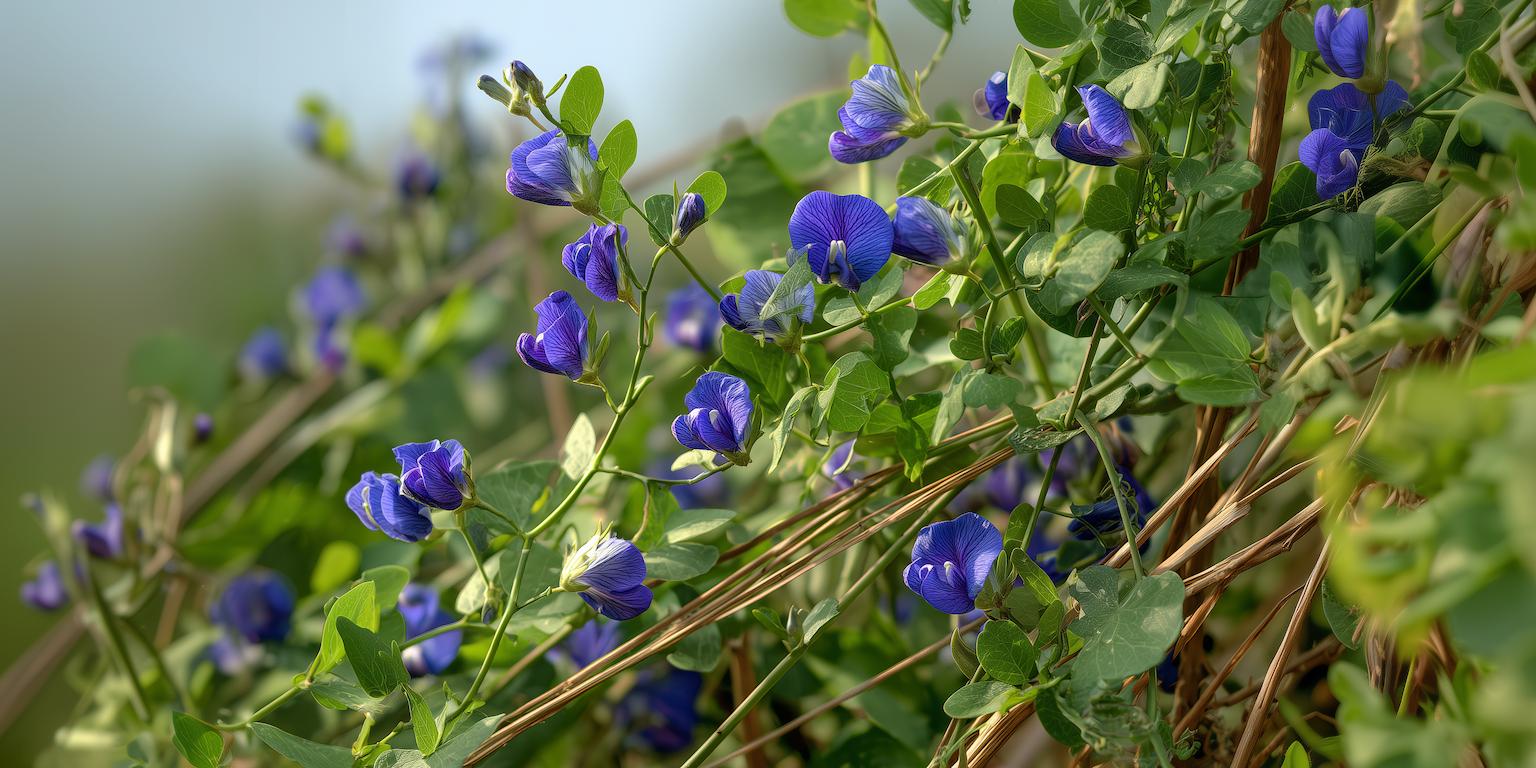
The Clitoria ternatea, pure and in full growth (hero image)

Botanical cuisine

Blue butterfly pea flower

Clitoria ternatea

Why we love this botanical

Blue butterfly pea produces an infusion that immediately brings calm to the head: bright violet-blue, softly floral and lightly green in aroma, with a subtle earthy undertone. The flower does not impose itself with perfume, but with nuance. The taste is mild, rounded and lightly drying, with a soft mouthfeel and a calm, lingering finish. It is precisely that quiet elegance that makes this flower so intriguing: colorful in appearance, restrained in taste.

In tea and botanical blends, blue butterfly pea mainly works as a calm carrier and connector. It brings color, softness, and a green florality that gives other ingredients space without disappearing. With citrus, the infusion gains more tension, with herbs more depth, and with fruit a softer profile. As a result, it fits both in light, refreshing compositions and in rounded evening blends in which balance is more important than pronounced strength.
Habitat & Origin

Clitoria ternatea is a climbing legume from tropical Asia, where it grows in a warm, humid climate with plenty of light and well-draining soil. The plant is traditionally cultivated in India and in parts of Southeast Asia, often along homesteads, in small gardens and on mixed plots where the vines can find support. For infusions, the opened flowers in particular are carefully picked and gently dried to preserve color and aroma. Rain, sun intensity and the time of harvesting also help determine how vivid the flower’s color is and how green or floral it appears in the cup.

Active compounds

The characteristic color comes mainly from anthocyanins known as ternatins. These pigments give the infusion its blue to violet-blue hue and react visibly to acid, causing the color to shift toward purple. In addition, the flower contains flavonoids and other plant compounds that contribute to a soft, slightly astringent structure and a calm, green flavor impression. Gentle steeping is sufficient; overly intense heating makes the color duller and the aroma flatter.

Ayurvedic approach

In the Ayurvedic tradition, blue butterfly pea is known as aparajita. The flower is generally described as cooling in nature and therefore fits well with formulas that aim to soothe pitta, while its mild character also leaves room for combinations with vata and kapha. In the broader herbal practice of South and Southeast Asia, it is valued for its bright color, its gentle taste, and its place in daily rituals around infusions, food, and care. That context is culturally rich, but always plant-centered and down-to-earth.

Thermal energy (Virya) cooling

Pitta

Balancing

Increasing Balancing

Effect: strong balancing

Vata

Balancing

Increasing Balancing

Effect: light balancing

Kapha

Balancing

Increasing Balancing

Effect: light balancing

Dosha’s & tea
Ayurveda

Tea Blog

Dosha’s & tea

What Ayurveda understands by Vata, Pitta and Kapha — and how that provides direction for tea.

Read the article

Flavour profile & Blending

Intensity

Strong

Accessibility

Accessible

Role in the blend

Base or harmonising herb (30–80%): forms the main body of the blend and brings the other ingredients into balance.

The indicated percentage refers to the approximate weight proportion of this herb within the total blend, but it can of course be adjusted to give the herb a more dominant or more subtle role.

In blends, blue butterfly pea combines beautifully with lemongrass, hibiscus, rose petals, lavender, mint, and mild spices such as cardamom. It often works as a base or bridge: less to taste dominant, more to provide color, roundness, and cohesion. With green tea or white tea it keeps the whole light; with ginger or citrus the blend gains more tension and contour.

An infusion of blue butterfly pea pairs well with coconut, lychee, mango, rice dishes, panna cotta, citrus tart and light almond bakes. The floral, green softness complements creamy and subtly sweet flavors nicely, while citrus or passion fruit provide contrast and make the color look even more vibrant. It also works refined and refreshing alongside sticky rice or fresh desserts.

More flavour details

Selection guide (aroma directions)

Intensity
3
Freshness
0
Citrus
0
Fruity
1
Floral
3
Spicy / Herbal
0
Earthy / Woody
2

Food pairing (structure)

Sweetness
2
Sourness
1
Bitterness
2
Astringency
2
Body
2
Aftertaste length
3
Sharpness / Pungency
0
Blending notes: vegetal (4/10)
Flavour appreciation
Taste

Tea Blog

Flavour appreciation

Learn to taste tea mindfully — from aroma and intensity to mouthfeel and food pairing.

Read the article

Experience Blue butterfly pea flower

Discover the versatility of this botanical in our blends, or use it as the foundation for your own creation in our Blendstudio.


Contact

Reach us via chat
Chat WhatsApp
9am-6pm on working days
Reach us by email
E-mail contact@maisontisane.nl
Response usually the same working day
Reach us by phone
Call 040 – 240 5807
9am-6pm on working days

Create your own

Blendstudio Workshops

Inspiration

Botanicals Tea Blog

You can shop safely with us

You can shop safely with us (Webwinkel Keurmerk)

Pay securely with:

iDEAL VISA Mastercard American Express Riverty PayPal

Shopping Cart

( )

Your cart is empty

Total