Maison Tisane
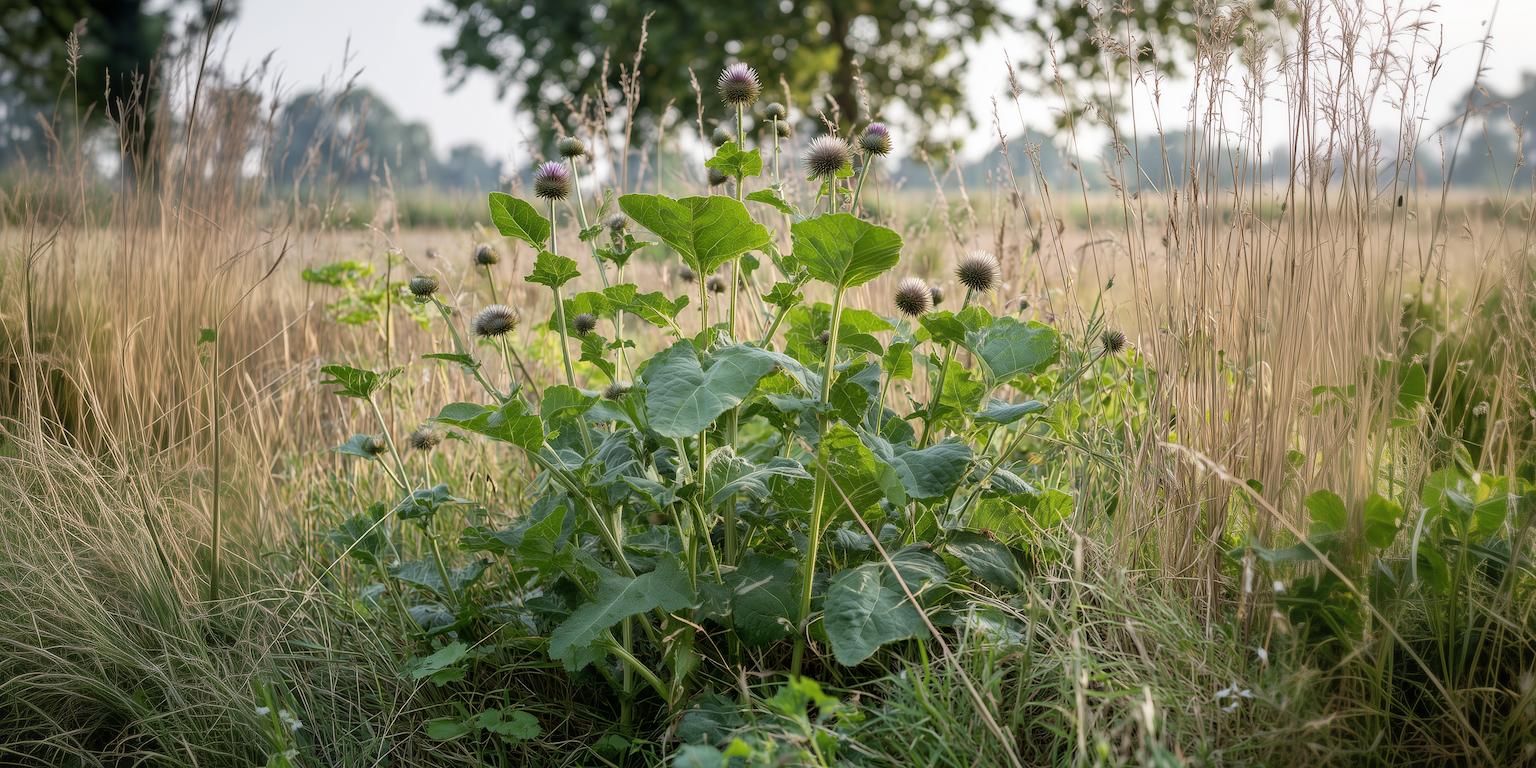
The Arctium lappa, pure and in full growth (hero image)

Botanical cuisine

Burdock root

Arctium lappa

Why we love this botanical

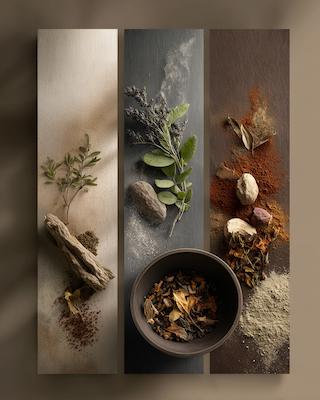
Great burdock opens with a quiet, earthy aroma reminiscent of freshly cut carrot, light woody notes and a hint of toasted grain. In the cup it appears golden-colored and soft in texture, with a rounded start, mild bitterness and a dry, clean finish. Beneath that sober depth lies a modest sweetness that keeps the whole approachable and gives the root a calm, layered character.

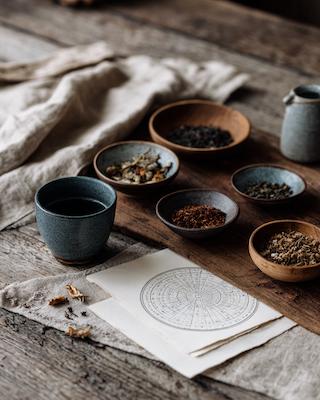
In tea and botanical blends, burdock acts as a supporting base that holds other flavors together. It gives herbal compositions more calm, offers flowers and leaf more depth, and helps volatile aromas linger longer in the mouth. Precisely because its flavor does not impose itself, it is valuable in blends that seek structure: it rounds off, connects, and anchors without overshadowing the character of other botanicals.
Habitat & Origin

Great burdock originally occurs in temperate regions of Europe and Asia and likes to grow along field edges, riverbanks, dikes and other open places where the soil is deep, nutrient-rich and loose. The plant likes sun to light partial shade and forms its long taproot in soil that retains enough moisture without remaining heavily waterlogged. For culinary cultivation, especially in Japan where the root is valued as gobo, airy beds are chosen so the roots can grow long and straight. Harvest preferably takes place before the flowering stem draws strength from the root and makes it more fibrous.

Active compounds

The mild, root-like profile of greater burdock is linked to an interplay of inulin, phenolic compounds, and bitter constituents. Inulin contributes to a soft, rounded impression in the mouth, while substances such as chlorogenic acid provide dry depth and a subtle bitter note. During drying, the character shifts from fresh and vegetal to warmer, earthier and slightly nuttier, giving the root more body and length in infusion.

Ayurvedic approach

Greater burdock does not belong to the best-known classical Ayurvedic head herbs, but its energetic profile can be interpreted well. The root is often experienced as lightly cooling and at the same time grounding, which is why in traditional interpretations it is often associated with pitta and kapha. In milder formulas it can also support vata, provided it is surrounded by warmer spices. In Japanese and European herbal traditions, the root has long been valued as a simple, nourishing plant in everyday preparations.

Thermal energy (Virya) light cooling

Pitta

Balancing

Increasing Balancing

Effect: strong balancing

Vata

neutral

Increasing Balancing

Effect: neutral

Kapha

Balancing

Increasing Balancing

Effect: light balancing

Dosha’s & tea
Ayurveda

Tea Blog

Dosha’s & tea

What Ayurveda understands by Vata, Pitta and Kapha — and how that provides direction for tea.

Read the article

Flavour profile & Blending

Intensity

Strong

Accessibility

Accessible

Character

earthy, lingering, full

Role in the blend

Base or harmonising herb (30–80%): forms the main body of the blend and brings the other ingredients into balance.

The indicated percentage refers to the approximate weight proportion of this herb within the total blend, but it can of course be adjusted to give the herb a more dominant or more subtle role.

Burdock root combines beautifully with dandelion root, chicory, ginger, cinnamon, fennel, licorice, and nettle. In blends it serves as a calm base and as a bridge between earthy roots, warm spices, and lighter leaves. Also alongside peppermint or citrus-like accents it helps ground the whole, without taking away the freshness or making the composition harsh.

An infusion of burdock pairs well with apple, pear, sesame, walnut and brown-sugar pastries, because its earthy dryness balances sweeter flavors. In savory dishes it goes beautifully with roasted root vegetables, mushrooms and miso, where its root note adds depth while also offering a clean, slightly bitter counterpoint. Its character also comes through convincingly with rye bread or soba.

More flavour details

Selection guide (aroma directions)

Intensity
4
Freshness
0
Citrus
0
Fruity
1
Floral
0
Spicy / Herbal
1
Earthy / Woody
8

Food pairing (structure)

Sweetness
4
Sourness
0
Bitterness
3
Astringency
1
Body
5
Aftertaste length
5
Sharpness / Pungency
1
Blending notes: toasty (3/10), vegetal (2/10), nutty (2/10)
Flavour appreciation
Taste

Tea Blog

Flavour appreciation

Learn to taste tea mindfully — from aroma and intensity to mouthfeel and food pairing.

Read the article

Precautions

Earthy and pure. If you are sensitive to daisy-family plants, start gently.

Experience Burdock root

Discover the versatility of this botanical in our blends, or use it as the foundation for your own creation in our Blendstudio.


Contact

Reach us via chat
Chat WhatsApp
9am-6pm on working days
Reach us by email
E-mail contact@maisontisane.nl
Response usually the same working day
Reach us by phone
Call 040 – 240 5807
9am-6pm on working days

Create your own

Blendstudio Workshops

Inspiration

Botanicals Tea Blog

You can shop safely with us

You can shop safely with us (Webwinkel Keurmerk)

Pay securely with:

iDEAL VISA Mastercard American Express Riverty PayPal

Shopping Cart

( )

Your cart is empty

Total