Maison Tisane
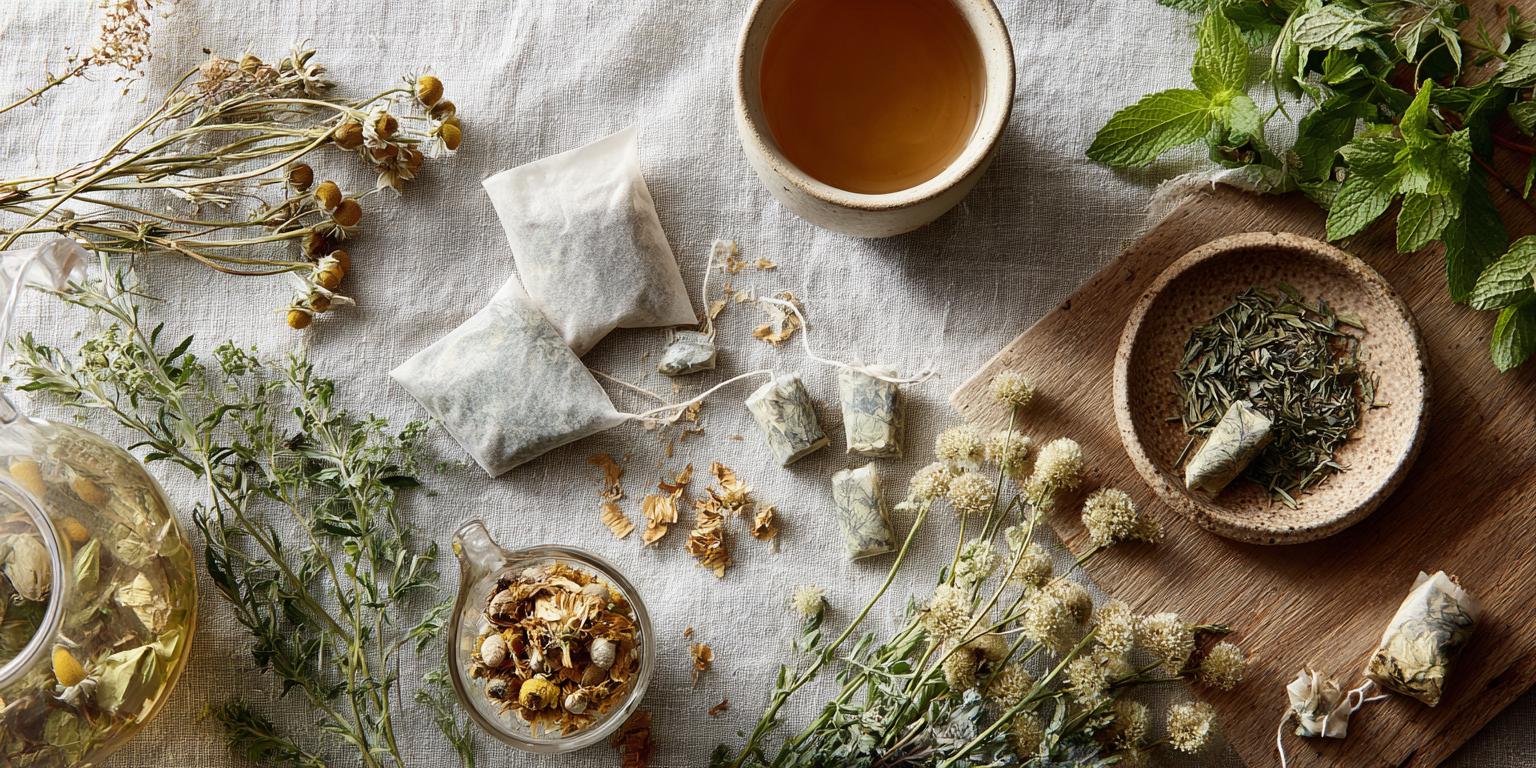
Loose tea or tea bags (hero image)

Loose tea or tea bags

More flavor, more control, less waste — the difference between loose tea, pyramid bags and classic tea bags.

Loose tea or tea bags: the difference you can taste

A teabag is convenient; loose tea feels like a ritual. The real difference lies in the leaf: whole, broken, or ground. If tea is given room to open up, the flavor develops more calmly—often clearer, less sharp, and with more nuance. At Maison Tisane, we therefore look not only at what you drink, but also at how you brew it: a few clear choices that help you taste better, even on busy days.

Put the same tea in three forms side by side, and it quickly becomes clear: fine dust infuses in one wave, broken leaf is the middle ground, and whole leaves release flavor in layers. Pitfalls are water that’s too hot, a bag that offers too little room, and squeezing it out over the mug. The gain: give tea room, steep a little more gently and taste halfway through—then you steer it yourself toward light, round, or strong.

Make it a mini ritual: smell the dry leaf, take one calm breath in, and pour slowly. Botanical luxury lies in attention, cup by cup.

Loose tea, pyramid bag or teabag

Loose tea and bags start from the same premise: dried leaf (or botanicals). The difference is mainly in leaf size, space and control. Those are exactly the things you taste back: a cup can be layered and clear, or instead quick and robust with less nuance.

Loose tea

Usually larger leaf or coarser botanicals that can open up in the water. That often gives a calmer extraction: aroma, body and finish build up.

  • More space in the pot, so a more even infusion
  • Often clearer in color and taste
  • Easier to dose per cup or pot

Pyramid bag

A middle ground: often coarser pieces than in a classic bag, and thanks to the shape just a bit more room to move.

  • Practical, but often with a bit more nuance than a flat bag
  • Usually infuses more neatly (less dust)
  • Control remains limited: dosage is fixed

Classic teabag

Many bags contain fine particles (often referred to as fannings or dust). They give color and flavor quickly, but can also become astringent or bitter more quickly.

  • Fast and consistent in a busy moment
  • Often less layered in aroma and finish
  • More chance of cloudiness due to fine dust

Important to know

A bag is not by definition “worse”. There are also bags with larger leaf, and loose tea can also be mediocre. What is almost always true: the finer the leaf, the faster and harsher the extraction. And that is exactly the difference you make noticeable in your cup.


Taste: why leaf size does so much

Brewing tea is extraction: water pulls aroma and flavor compounds from leaf and botanicals. Fine particles have relatively a lot of surface area and therefore release quickly. That seems convenient (dark color, quick flavor), but it also makes a cup more sensitive to “too much”: too hot, too long, too much movement.

Larger leaf releases more gradually. You more often taste a build-up: first aroma, then body, then a longer, calmer finish. That is the kind of nuance people often call “softer” or “round”, even if the tea is not necessarily less powerful.

Don’t look only at color

A classic bag can turn deep in color within a few minutes. That feels “strong”, but color is not the same as layeredness. So also taste for mouthfeel (dry or smooth), finish (short or long) and balance (clear or somewhat flat).

What loose tea often gives

  • More aroma layers (you smell and taste more difference)
  • A cup that stays open longer instead of becoming “harsh” quickly
  • More room for subtle botanicals (think chamomile or mint)

What bags often give

  • Quickly a clear profile: direct and recognizable
  • Less variation between cups (dosage is fixed)
  • Greater chance that the cup becomes astringent or bitter more quickly with water that’s too hot

Brew: space makes the cup clearer

Besides leaf size, something very simple also plays a role: space. In a bag, tea stays compact. Water flows past it, but circulates less freely through the leaf. This can make extraction uneven: outside “over”, inside “under”. Loose tea in a roomy pot (or a large infuser basket) often infuses more evenly.

A small upgrade that does a lot

If you want loose tea without hassle, choose a tea strainer or a roomy infuser basket. The goal is not “to brew beautifully”, but: let the leaf open, let it steep calmly, and pour out clearly.

How to prevent cloudiness

  • Give the leaf space (pot or large basket; preferably no small tea ball).
  • Don’t stir: too much movement loosens more fine particles.
  • Pour calmly and let the tea drip off after steeping (don’t squeeze).

And this is how the taste stays soft

  • Use water that isn’t boiling hard.
  • Prefer to taste a bit earlier and then extend, rather than the other way around.
  • Cover during steeping: aroma stays more “in” the cup.

If you want to zoom in on this more deeply (water, temperature, time and rest), our brewing guide fits nicely: How do you brew herbal tea?.

Control: why loose tea is easier to get right

With loose tea you can steer on dosage (a bit more or less leaf) and on steeping time. With a bag, the dosage is fixed; you mainly steer with time, temperature and movement. That is exactly why bagged tea sometimes seems to have “one setting”: it gets strong quickly, and then too much quickly.

Practical adjustments without hassle

If your cup becomes too bitter or astringent

  • Use slightly cooler water.
  • Shorten steeping time by 30–60 seconds.
  • Let the bag drip off calmly: don’t squeeze.

If your cup stays too light

  • Extend steeping time in small steps.
  • With loose tea, use a bit more leaf (small margin, big effect).
  • Cover: heat and aroma stay more stable.

Tip for bags that helps immediately

After steeping, let a bag drip off on a saucer instead of squeezing it out over the cup. Squeezing pushes fine particles and drier notes into your drink. Letting it drip off calmly keeps the cup softer, with more nuance.

Environment: small, but not unimportant

Those who like to drink more consciously will naturally come to the material of bags and filters. Loose tea can mean less disposable waste (especially with a reusable strainer), but here too: it depends on packaging and use. The nice thing is: you don’t have to do it perfectly to make a difference.

If you use bags

  • Check whether the bag is made of paper and whether it is individually wrapped.
  • With pyramid bags, the material differs by brand. Check the packaging if you prefer to avoid plastic.
  • Prefer not to toss a bag “blindly” onto the compost heap: compostability varies.

If you use loose tea

  • Work with a reusable tea strainer or a roomy basket.
  • If you still want disposable, then choose paper tea filters (handy if convenience comes first).
  • Make it easy on yourself: one fixed place for tea, strainer and spoon. Routine is often more sustainable than discipline.

The most pleasant starting point: choose what fits your day, and within that make a conscious micro-choice. Sometimes that’s loose tea with a strainer. Sometimes that’s a good bag without unnecessary packaging. It’s about direction, not perfection.

Contact

Reach us via chat
Chat WhatsApp
9am-6pm on working days
Reach us by email
E-mail contact@maisontisane.nl
Response usually the same working day
Reach us by phone
Call 040 – 240 5807
9am-6pm on working days

Create your own

Blendstudio

Inspiration

Botanicals Tea Blog

You can shop safely with us

You can shop safely with us (Webwinkel Keurmerk)

Pay securely with:

iDEAL VISA Mastercard American Express Riverty PayPal

Shopping Cart

( )

Your cart is empty

Total