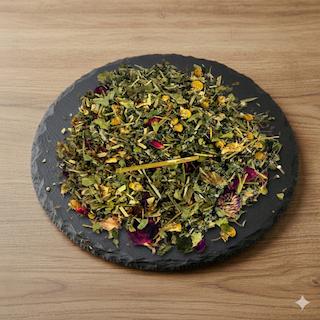
Maison Tisane
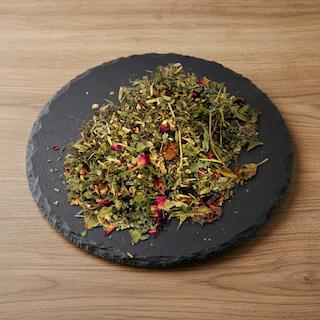
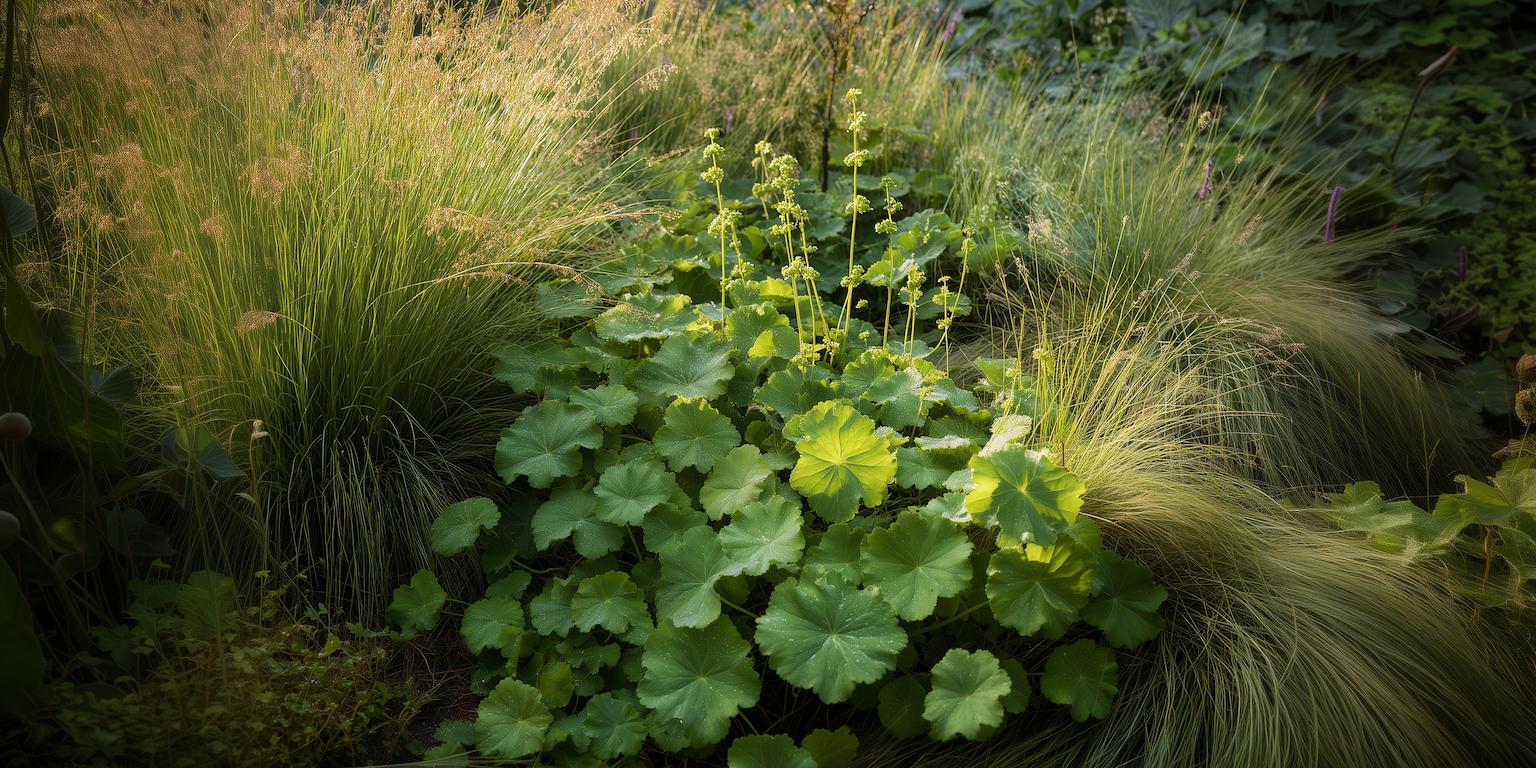
The Alchemilla vulgaris, pure and in full growth (hero image)

Botanical cuisine

Lady's mantle

Alchemilla vulgaris

Why we love this botanical

Lady’s mantle opens softly and green, with the quiet aroma of fresh leaf, hay and a light spicy dryness. In the cup appears a golden-yellow infusion that does not want to impress by scent, but by texture: slender, taut and finely astringent. Precisely in that lies its character. It tastes like a garden after rain, with a restrained bitterness and a calm, earthy length that leaves the mouth clean and clear.

In botanical compositions, lady’s mantle is not an outspoken soloist, but a quiet organizer. It provides mid-structure, brings green tension, and keeps floral or fruity ingredients in shape. Alongside rose, raspberry leaf, lemon balm, or linden blossom, it provides grip; with sweeter notes it tempers roundness without making the whole harsh. That makes it interesting in blends that seek elegance: less perfume, more structure, and a finish that remains present for a long time but understated.
Habitat & Origin

Lady’s mantle grows naturally in temperate parts of Europe, where it appears in moist meadows, verges, forest edges and gently rolling hill country. It likes cool air, regular rainfall and soil that is rich in humus but drains well. In herb gardens it is often planted in sheltered spots where morning dew lingers for a long time on the pleated leaves. For infusions, the young leaves are mainly harvested between late spring and midsummer, sometimes together with the delicate flower clusters, when the tissue is still supple and the green remains aromatically fresh. Slow drying in the shade preserves its golden-yellow head and its dry, vegetal tension.

Active compounds

The profile of lady’s mantle is mainly carried by tannins, flavonoids and phenolic acids. The tannins provide the characteristic dry grip and a slightly astringent mouthfeel; flavonoids bring a green, gentle bitterness and a calm herbal undertone. With a hot, somewhat longer infusion, those drying nuances come through more clearly. During drying, the leaf loses some of its juicy freshness and the character shifts toward hay, herb and a tighter, more structured, more sustained structure.

Ayurvedic approach

Lady’s mantle is primarily rooted in European herbalism, where it has long been regarded as an herb of gentleness, rhythm, and care. In Ayurvedic terms it is not a classic foundational herb, but its light cooling and drying nature can be placed well: it is more readily associated with calming pitta and relieving heaviness in kapha than with nourishing vata. In a broader herbal tradition it therefore fits with clear, simple infusions and with rituals in which rest, moderation, and seasonal sensitivity are central.

Thermal energy (Virya) light cooling

Pitta

Balancing

Increasing Balancing

Effect: strong balancing

Vata

Increasing

Increasing Balancing

Effect: light increasing

Kapha

Balancing

Increasing Balancing

Effect: light balancing

Dosha’s & tea
Ayurveda

Tea Blog

Dosha’s & tea

What Ayurveda understands by Vata, Pitta and Kapha — and how that provides direction for tea.

Read the article

Flavour profile & Blending

Intensity

Strong

Accessibility

Accessible

Character

astringent, vegetal, lingering

Role in the blend

Balanced herb (10–20%): creates a harmonious foundation and supports the other flavours.

The indicated percentage refers to the approximate weight proportion of this herb within the total blend, but it can of course be adjusted to give the herb a more dominant or more subtle role.

Lady’s mantle works beautifully with raspberry leaf, rose petals, chamomile, lemon balm and linden blossom. In a blend it provides a dry, green backbone that organizes floral or fruity notes. Also alongside nettle or a small touch of hibiscus it keeps the cup slender and clear, as a bridge between softness and structure. In this way it brings balance without drawing attention to itself.

An infusion of lady’s mantle pairs well with apple or pear, oat biscuits, yogurt with toasted oats, soft goat cheese and light cream desserts. Its dry, green grip brings balance alongside butter, dairy and ripe fruit, keeping sweet preparations fresh. It also creates a quiet, almost garden-like harmony with cucumber, young herbs and mild vinaigrettes.

More flavour details

Selection guide (aroma directions)

Intensity
4
Freshness
0
Citrus
0
Fruity
1
Floral
1
Spicy / Herbal
1
Earthy / Woody
4

Food pairing (structure)

Sweetness
2
Sourness
1
Bitterness
4
Astringency
7
Body
4
Aftertaste length
5
Sharpness / Pungency
0
Blending notes: vegetal (6/10)
Flavour appreciation
Taste

Tea Blog

Flavour appreciation

Learn to taste tea mindfully — from aroma and intensity to mouthfeel and food pairing.

Read the article

Precautions

A traditional women's herb. During pregnancy, best used mindfully and in moderation.

Experience Lady's mantle

Discover the versatility of this botanical in our blends, or use it as the foundation for your own creation in our Blendstudio.


Contact

Reach us via chat
Chat WhatsApp
9am-6pm on working days
Reach us by email
E-mail contact@maisontisane.nl
Response usually the same working day
Reach us by phone
Call 040 – 240 5807
9am-6pm on working days

Create your own

Blendstudio Workshops

Inspiration

Botanicals Tea Blog

You can shop safely with us

You can shop safely with us (Webwinkel Keurmerk)

Pay securely with:

iDEAL VISA Mastercard American Express Riverty PayPal

Shopping Cart

( )

Your cart is empty

Total