Maison Tisane
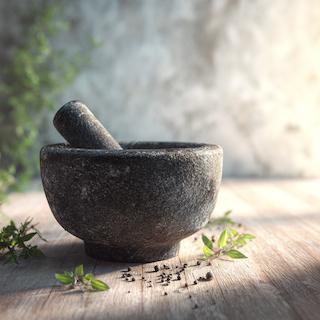
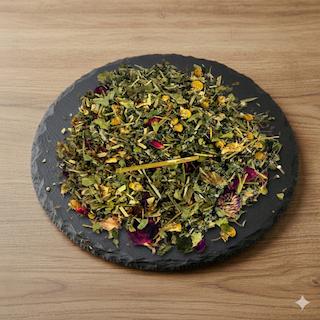
The Avena sativa, pure and in full growth (hero image)

Botanical cuisine

Oat straw

Avena sativa

Why we love this botanical

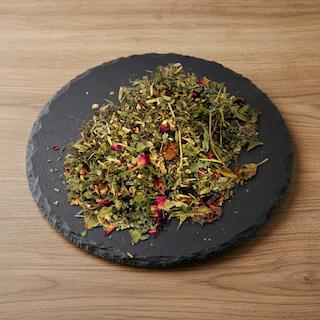
Oat straw gives a quiet, golden-yellow head with the scent of fresh hay, young stalks and warm grain. On the palate it is soft and rounded, with a mild sweetness that recalls oats, dried grass and a hint of field in late summer. No exuberant perfume, but calm and texture: a botanical that doesn’t push itself forward, but unfolds low and wide, with a dry, green softness that lingers pleasantly.

Precisely because of that restrained character, oat straw is valuable in botanical blends. It adds body without heaviness, softens sharp edges, and gives flowers, leaves, and seeds a natural base. Where fresh herbs can sometimes become too pointed and sweet spices too dominant, oat straw keeps the composition open and balanced. In an infusion it works as a binding layer: mildly grain-like, lightly vegetal, and neutral enough to let other botanicals speak.
Habitat & Origin

Oats are a classic crop of cool, temperate regions and feel at home in open agricultural landscapes with fresh springs, mild summers, and sufficient moisture. The plant grows well on airy loam and sandy soils that retain water but do not remain waterlogged, often precisely in places where richer grains are less likely to succeed. Within European arable farming, oats early on became a familiar crop, later also widely cultivated in North America. For oat straw, the stems and leaves are harvested when the plant is still vibrantly green or shortly around ear formation, after which slow drying is important to preserve the soft, hay-like and lightly grainy character.

Active compounds

The profile of oat straw is subtle and relies on an interplay of plant structural substances, light phenolic compounds, and green leaf components. In oats, among other things, flavonoids, phenolic acids, and oat-specific phenols occur; in addition, the mineral fraction, including silicon, gives the infusion a drier and tighter feel. During drying, the aroma shifts from fresh grass to softer hay and warm grain. As a result, the infusion has fewer sharp vegetal notes and a more rounded, calm body.

Ayurvedic approach

Oat straw is not among the best-known classical Ayurvedic herbs, but it does align with the traditional view of oats as gentle, lightly cooling, and nourishing in nature. In that context it fits especially with Vata and Pitta, because it does not bring pronounced heat and has a calm, enveloping quality. In Ayurvedically inspired infusions it is therefore used more as a supporting base than as a sharp accent. In European herbal practices too, oat straw had a place as a simple, everyday plant part for mild decoctions.

Thermal energy (Virya) light cooling

Pitta

Balancing

Increasing Balancing

Effect: light balancing

Vata

Balancing

Increasing Balancing

Effect: strong balancing

Kapha

neutral

Increasing Balancing

Effect: neutral

Dosha’s & tea
Ayurveda

Tea Blog

Dosha’s & tea

What Ayurveda understands by Vata, Pitta and Kapha — and how that provides direction for tea.

Read the article

Flavour profile & Blending

Intensity

Strong

Accessibility

Accessible

Character

vegetal

Role in the blend

Base or harmonising herb (30–80%): forms the main body of the blend and brings the other ingredients into balance.

The indicated percentage refers to the approximate weight proportion of this herb within the total blend, but it can of course be adjusted to give the herb a more dominant or more subtle role.

In tea and herbal blends, oat straw works best as a base or bridge. It connects green botanicals such as lemon balm, nettle and raspberry leaf with softer flowers like chamomile or linden. Also alongside fennel seed, oaty grains and mild spices, it brings more body and calm. Handy when a blend may feel rounder, less sharp and better supported.

An infusion of oat straw pairs beautifully with oat biscuits, butter cookies, apple cake, pear compote and other soft baked flavors in which grain and butter come together. The mild, green notes add freshness without weighing down sweet pastries. It also works well alongside fresh cheese, a leek quiche or roasted almonds: the infusion keeps the whole light and calm, with just enough earthy depth.

More flavour details

Selection guide (aroma directions)

Intensity
3
Freshness
1
Citrus
0
Fruity
0
Floral
0
Spicy / Herbal
0
Earthy / Woody
4

Food pairing (structure)

Sweetness
4
Sourness
0
Bitterness
1
Astringency
1
Body
4
Aftertaste length
3
Sharpness / Pungency
0
Blending notes: vegetal (7/10), nutty (2/10)
Flavour appreciation
Taste

Tea Blog

Flavour appreciation

Learn to taste tea mindfully — from aroma and intensity to mouthfeel and food pairing.

Read the article

Precautions

Mild and gentle. If you are sensitive to oats, start carefully.

Experience Oat straw

Discover the versatility of this botanical in our blends, or use it as the foundation for your own creation in our Blendstudio.


Contact

Reach us via chat
Chat WhatsApp
9am-6pm on working days
Reach us by email
E-mail contact@maisontisane.nl
Response usually the same working day
Reach us by phone
Call 040 – 240 5807
9am-6pm on working days

Create your own

Blendstudio Workshops

Inspiration

Botanicals Tea Blog

You can shop safely with us

You can shop safely with us (Webwinkel Keurmerk)

Pay securely with:

iDEAL VISA Mastercard American Express Riverty PayPal

Shopping Cart

( )

Your cart is empty

Total