Maison Tisane
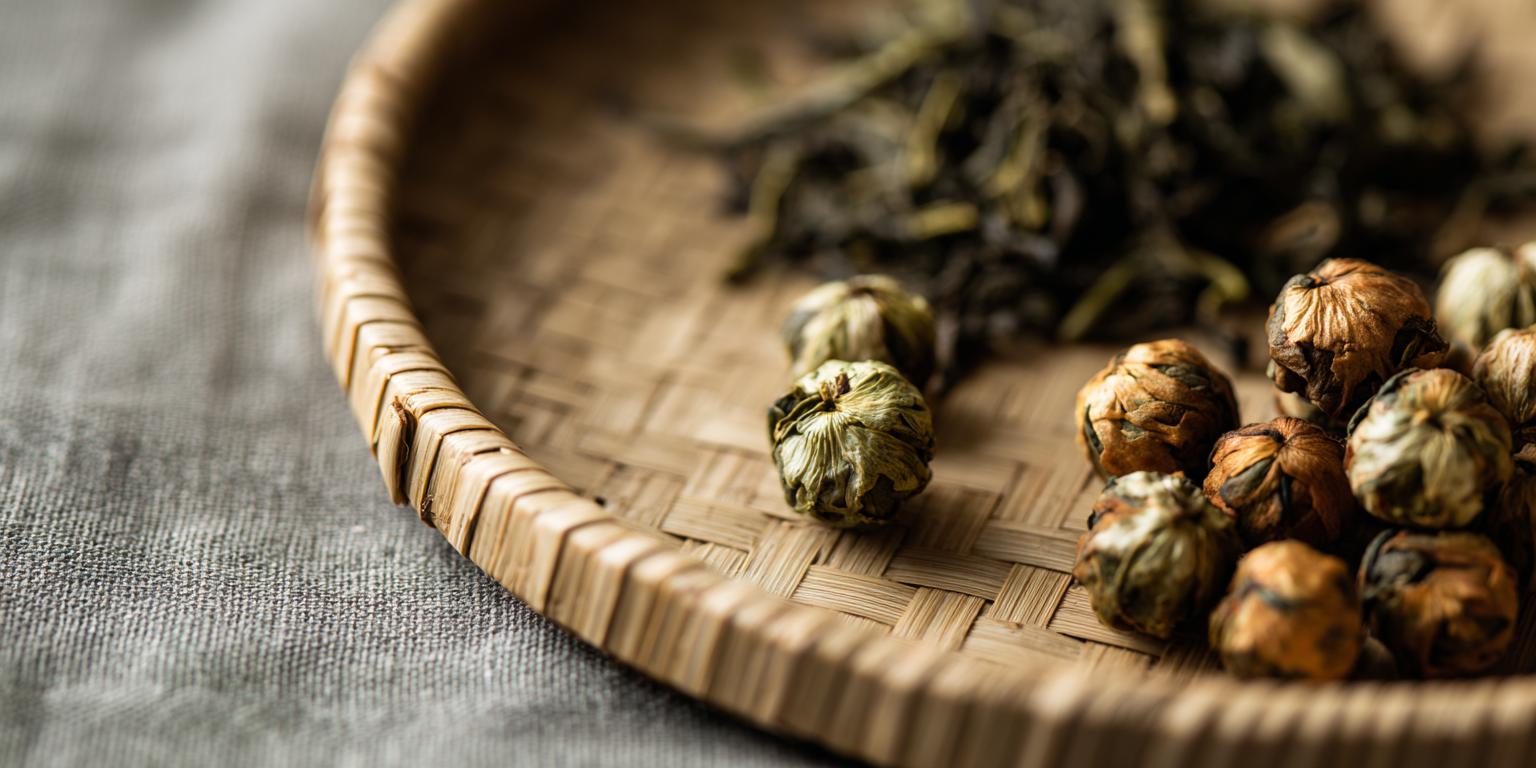
Oolong origin (hero image)

Oolong origin

Oolong between green and black — shaped by altitude, time and craftsmanship.

Oolong tea: origin and techniques behind the leaf

Oolong tea is not a fixed flavor, but a spectrum: from light and floral to deep and roasted. That character arises less during brewing, and mainly in what happens before the first sip: picking, withering, shaking, oxidation, rolling and sometimes roasting. From the cliff faces in Wuyi (Fujian) to the mountain gardens of Taiwan: each region gives Camellia sinensis its own signature. At Maison Tisane we like to look at that layer of origin and craftsmanship, because it helps you taste more precisely and choose with more confidence.

Oolong is often presented as a single category, but two oolongs with the same word on the label can taste completely different. The difference lies in three knobs: terroir and cultivar, oxidation and finish (rolling, roasting, aging). Those who focus only on brewing temperature miss the main players; those who rely only on tasting notes miss the process. If you recognize those three knobs, you immediately understand why one oolong leans toward orchid and honey, and the other feels more mineral, nutty, and darker.

First smell the dry leaf, and then the first warm steam from your pot. Oolong likes to reveal its layers slowly.

What oolong tea is

Oolong comes from Camellia sinensis, the same tea plant as green and black tea. The difference lies in the craftsmanship: oolong is partially oxidized and then stopped at precisely the right moment. This allows oolong to be floral and fresh at the same time, but also round, roasted and deep.

You can see oolong as “the middle” of tea, but that middle is broad. From light and orchid-like (almost green) to dark, mineral and toasty (almost black). In that space, the interesting things happen: small choices in picking, withering, shaking, oxidation and roasting make a world of difference.

A short nuance that helps with tasting

With oolong you often taste layers: first aroma (top), then body (middle), then a soft, longer tail (finish). That’s not magic, but technique: the leaf is treated in such a way that aroma, structure and roast notes are released in different “layers”.


Origin and landscape

Oolong is inseparably linked to place. Not only the country, but also altitude, mist, soil and microclimate. In the classic oolong regions, tea is not a bulk crop; it is a craft that relies on seasons, picking moment and experience.

Fujian (China)

Fujian is a home base of oolong tradition. Two names you often come across:

Taiwan

Taiwan is known for high-altitude gardens and precise processing. You often taste that as clear floral notes and a clean, soft body. Two styles that nicely show how broad oolong can be:

Why altitude and mist come up so often

In a cooler, mistier climate, the leaf grows more slowly. That gives makers more “material” to work with: refined aromas, soft structure, more nuance. It always remains a combination of place and craftsmanship, but the landscape sets the tone.

The technique behind oolong

Oolong is often described with an oxidation percentage, but that is really the end result of a series of decisions. The core of oolong is this: you let the leaf change just enough, and then stop at the moment when aroma, structure and tension are in balance.

From picking to drying: the main steps

  1. Picking: often mainly the bud with a few leaves. Timing (season, day, weather) determines how “juicy” and aromatic the starting material is.
  2. Withering: the leaf loses moisture and becomes supple. Aromas begin to form.
  3. Shaking and resting: the leaf is gently moved, gets small damages at the edges, and then rests again. It is precisely that repetition that shapes the character.
  4. Oxidation: controlled, not maximal. This is where the bridge between green (fresh) and dark (round) is created.
  5. Fixing: with heat, the process is stopped at the right point.
  6. Rolling: the leaf takes shape (strips or pellets) and more flavor compounds are released in later infusions.
  7. Drying: stabilizes the tea, makes it shelf-stable and “sets” the profile.

Shaking and resting is not a side issue

This is the moment when oolong often gets its signature. Gentle stress on the leaf creates different aromas than in tea that is simply left to dry. It is precise work: too little and it stays flat; too much and it becomes coarse. Good oolong therefore rarely feels “harsh,” even when it is roasted.

Do you find this kind of process interesting? Then it’s also nice to occasionally go back to the difference between tisane and tea. It helps to look with different eyes at leaf, botanicals and extraction.

Roasting and time

After oxidation, many oolongs get a second signature: roasting. Roasting is not an “extra flavor”; it is a way to manage moisture, soften sharpness and deepen the profile. Sometimes very light, sometimes pronounced.

Lightly roasted

More emphasis on flowers, citrus, fresh green. Often bright, transparent and elegant.

Medium roasted

Rounder and a bit nuttier. Think biscuit, buttery, riper fruit, more body.

Dark roasted

Deep and warm: cocoa, wood, toast. Often with a long, calm finish.

Aging in some oolongs

Some styles can become even rounder with time. Not every oolong is meant to be stored, but storage (dry, dark, odor-free) is always important. Practical: this is how you store tea without aromas fading or strange smells seeping in.

How to learn to taste oolong calmly

Oolong is often called “complex.” In practice it becomes simple if you pay attention to three things: aroma, mouthfeel and finish. And you don’t need to know tasting language. You just need to look closely and honestly name what you notice.

Look at the leaf

  • Shape: pellets (often Taiwanese style) or long, twisted leaves (often rock or mountain styles).
  • Whole versus dust: the less “dust” and broken leaf, the cleaner and more consistent the cup usually becomes.
  • Dry aroma: floral, fruity, nutty, toasty, mineral. If it’s mainly “perfume,” be critical.

Taste in three sips

  1. First sip: top notes (flower, citrus, stone fruit).
  2. Second sip: body and texture (creamy, silky, drier, fuller).
  3. Third sip: what lingers (honey, roasted, mineral, slightly sweet).

Want to do this more often, without it becoming “serious”? Keep it small: one tea, two cups, five minutes of attention. Optionally, our page about taste appreciation helps to put words to what you already taste.

Brewing: minimal, but with respect for the leaf

You asked mainly about origin and technique, so here only a gentle base. With oolong, almost always: give it space, use hot but not aggressive water, and taste one extra time rather than “finishing” it strictly by the clock.

Dosage

2–3 g per 250 ml

Water

90–95 °C (preferably not boiling hard)

Time

2–4 min, then taste and adjust

Tip: many oolongs can be steeped multiple times. Don’t see that as “extra effort,” but as part of the character: each infusion shows a different layer.

Oolong is a tea that invites you to slow down without becoming complicated. Look at the leaf, take a quick smell before you pour, and taste with attention. Luxury here is not in rarity, but in the moment when you truly get to know the leaf.

Contact

Reach us via chat
Chat WhatsApp
9am-6pm on working days
Reach us by email
E-mail contact@maisontisane.nl
Response usually the same working day
Reach us by phone
Call 040 – 240 5807
9am-6pm on working days

Create your own

Blendstudio Workshops

Inspiration

Botanicals Tea Blog

You can shop safely with us

You can shop safely with us (Webwinkel Keurmerk)

Pay securely with:

iDEAL VISA Mastercard American Express Riverty PayPal

Shopping Cart

( )

Your cart is empty

Total

Shared cart

Someone has shared a cart with you. Would you like to add these products to your cart?

Total