Maison Tisane
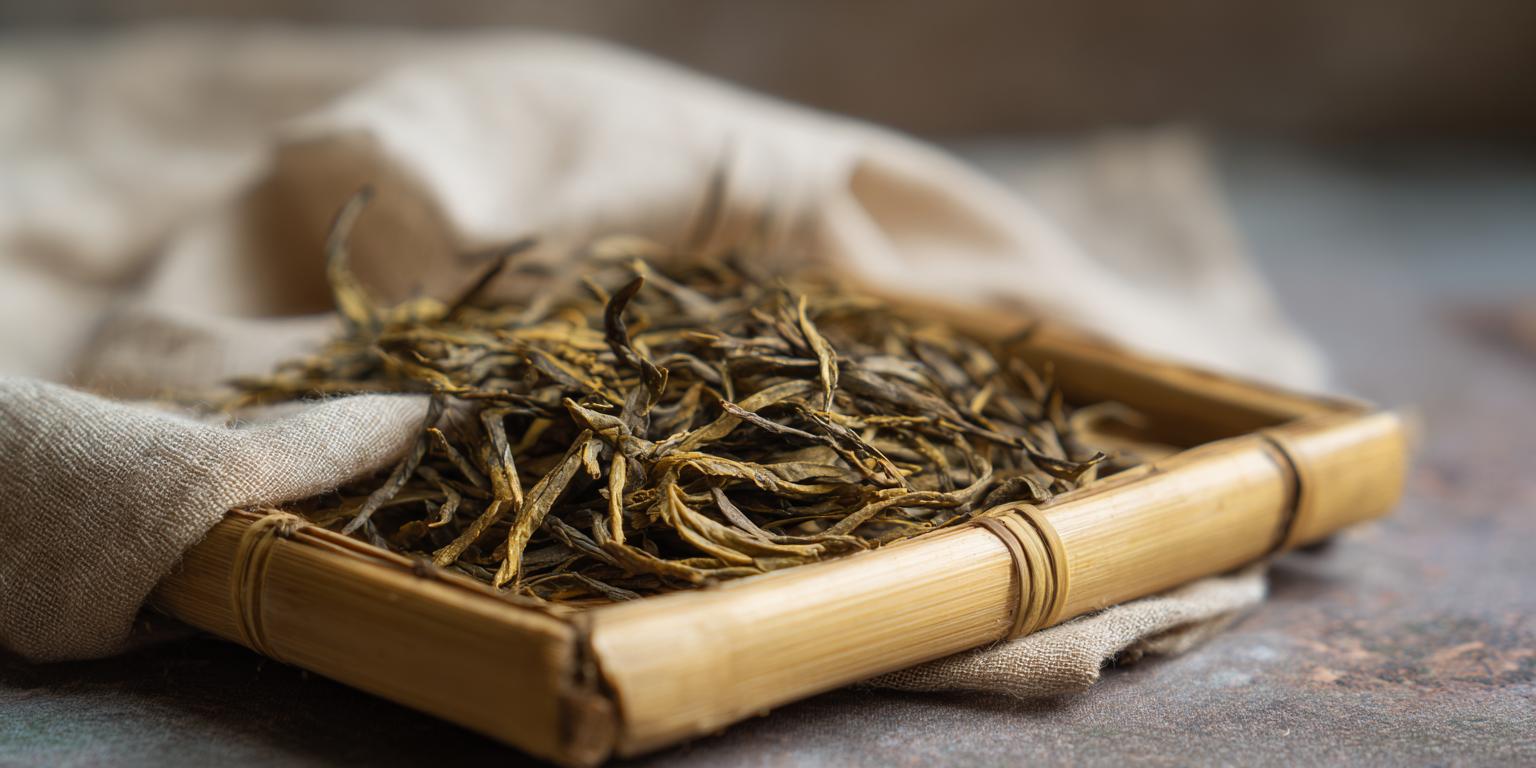
Yellow tea (hero image)

Yellow tea

The rare tea style between green and white — made with warmth, calm, and patience.

Yellow tea: origin, production and soft layers of flavor

Yellow tea (huangcha) is a rare style within the Chinese tea world: made from young leaves, with an extra resting moment in the process that makes the flavor rounder. The result sits somewhere between green and white: less grassy, softer, often with a subtly sweet finish. At Maison Tisane we prefer to look at what happens to the leaf rather than rules: what happens between picking, heating, resting, and drying? Right at the end you’ll find a short brewing guide, so you don’t overpower the character of the leaf.

You will also come across tea that is called yellow, but in practice is closer to green tea, or is a blend that gets its color from flowers. That’s not wrong, but it’s a different story. Yellow tea as a style is a technique: after heating and shaping, the leaf is kept warm for a while longer, so it can slowly finish and change color. That calls for small batches, patience, and a tea maker who reads timing like an instrument. If you know what to look for in origin and processing, you can taste why this type is so scarce — and why it fits so beautifully with a quiet tasting moment.

Pour a small cup, take a quick sniff under the lid and taste the aftertaste. Green tea reveals itself best when you don’t force anything.

What makes yellow tea special

Yellow tea is rare, not because it is a “different plant,” but because it is a different choice in technique. Like green, white, oolong and black tea, yellow tea comes from Camellia sinensis. The difference lies in an extra step during production: the leaf is given time to gently “yellow” under warmth and rest. As a result, part of the pronounced green, grassy character disappears, and a cup emerges that can be round, soft and layered.

Not yellow because of color, but because of attention

The name refers to the yellow moment in the process, and sometimes to the warm, golden color in your cup. It is not flavoring, no additive, and also not a marketing term: with real yellow tea you can taste it in texture and mouthfeel. Less “sharp green,” more soft depth.

Because the process requires extra work and timing, yellow tea is often made in smaller volumes than green tea. That is exactly why a good yellow tea can be such a lovely discovery: you taste not only the leaf, but also the patience.


Origin: Chinese tradition with a quiet reputation

Yellow tea is historically strongly associated with China and is seen there as a classic, but rare tea style. In the traditional classification it often sits somewhat in the shadow of green tea (more well-known) and oolong (more diverse), while yellow tea is loved precisely for its muted elegance.

Well-known styles you may come across

  • Bud tea (bud-heavy): often very light, creamy and subtle, with a gentle sweetness.
  • Leaf tea (leaf-heavy): a bit fuller, with notes that can evoke chestnut, hay or soft flowers.
  • Regional expressions: some yellow teas are refined and ethereal, others a bit warmer and rounder.

In our selection you will find, for example, a yellow tea from Yunnan: Yellow Dragon Yellow tea. See it as a style reference: not to compare on “better,” but to feel what yellow tea as a category can be.

Are you curious about the distinction between a herbal infusion and real tea from Camellia sinensis? Then What is a tisane? is a nice deepening.

Technique: the yellow moment in production

Where green tea mainly revolves around quickly “fixing” (stopping oxidation) to preserve the fresh green, yellow tea chooses a subtle detour. After heating, the leaf is given time under warmth and moisture. This resting phase is often referred to as menhuang (the “yellowing”). It is not full oxidation like with black tea, but a controlled, gentle development of the leaf.

From pluck to dry: a classic outline

  1. Plucking: often young leaves or buds, depending on style and region.
  2. Brief withering: the leaf loses some moisture, becomes more pliable.
  3. Heating (kill-green): to largely stop the “green” enzyme activity.
  4. Shaping: lightly rolling or shaping, to give structure.
  5. Menhuang: the leaf is kept warm (for example in cloth or paper), so it can gently become “yellow.”
  6. Drying: to stabilize the process and make the tea shelf-stable.

Why that one extra moment does so much

That resting phase often tames the sharp, vegetal edges and shifts the flavor toward gentle sweetness and round body. When done well, yellow tea rarely feels aggressive. More like a cup that slowly opens up: first light, then warmer, with a longer, calm finish.

Flavor: softer than green, lighter than oolong

If you try to “place” yellow tea, one thought helps: it is not green tea with a different name, and also not oolong-light. It is its own style, often with a muted brightness. Think soft grains, light florality, a hint of honey or ripe fruit, and sometimes something that recalls warm straw notes.

What you often smell

  • blossom, orchid or wildflower
  • warm grains (rice, corn, wheat)
  • gentle sweetness (honey-like, but subtle)

What you often taste

  • less “green” than sencha-like
  • rounder mouthfeel than many green teas
  • low bitterness, with a calm finish

A small tasting routine that reveals a lot

  1. Smell the dry leaf (briefly, not too long): look for warm versus fresh.
  2. Smell the wet leaves: this is where the true signature often comes out.
  3. Taste in two sips: one for aroma, one for mouthfeel.

Want to deepen your tasting skill without making it complicated? Flavor evaluation in tea helps you put words to what you already taste.

Choosing and storing: quality is in the details

Because yellow tea is subtle, differences in quality stand out more quickly. A good yellow tea tastes clear and round. A less successful version can become flat, or instead rough and dry. That has not only to do with the leaf, but often with processing and storage.

What you can look for when buying

  • Origin information: region/province, harvest moment (spring is often a good indication), and preferably a specific name or style.
  • Leaf appearance: relatively uniform, little dust, no dull “dusty” smell.
  • Aroma: soft and inviting, not sharp, not musty.
  • Packaging: light and air are the enemies of nuance; choose well-sealed packaging.

Storing is not a side issue with yellow tea

Yellow tea often has fragile top notes. You want to protect those: dark, dry, cool and odor-neutral. Do not store it next to herbs with strong aromas or in a cupboard where cooking smells linger. You can find practical tips in Keeping tea fresh.

And one more simple thing that helps: choose, if possible, loose leaf instead of bags. Not out of snobbery, but because yellow tea leaf needs room to open. That is where the softness comes from.

Brewing, very minimal: soft water and low heat

Yellow tea is forgiving if you remember one thing: not too hot. You want to bring the round notes forward, not “break open” the leaf. See this as a calm base; after that you fine-tune in small steps.

A simple start

Dosage

2 grams per 250 ml (about 1 heaping teaspoon, depending on leaf)

Water

75–85 °C (lower for bud tea, slightly higher for leaf tea)

Time

2–3 minutes, taste and decide whether to extend

Repeat

2–4 infusions is often possible, with slightly longer time per round

Practical detail: a spacious strainer helps keep the leaf intact. A simple tea strainer is often enough.

Yellow tea does not ask for many rules, but it does ask for a calm pace. Pour more gently, give the leaf space, taste halfway through. It is the kind of cup you don’t “drink down,” but keep with you for a moment.

Contact

Reach us via chat
Chat WhatsApp
9am-6pm on working days
Reach us by email
E-mail contact@maisontisane.nl
Response usually the same working day
Reach us by phone
Call 040 – 240 5807
9am-6pm on working days

Create your own

Blendstudio Workshops

Inspiration

Botanicals Tea Blog

You can shop safely with us

You can shop safely with us (Webwinkel Keurmerk)

Pay securely with:

iDEAL VISA Mastercard American Express Riverty PayPal

Shopping Cart

( )

Your cart is empty

Total

Shared cart

Someone has shared a cart with you. Would you like to add these products to your cart?

Total