Maison Tisane
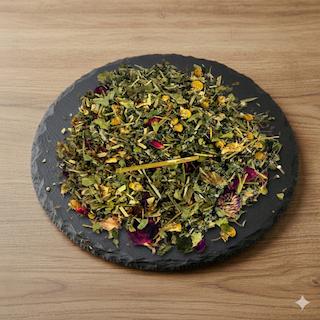
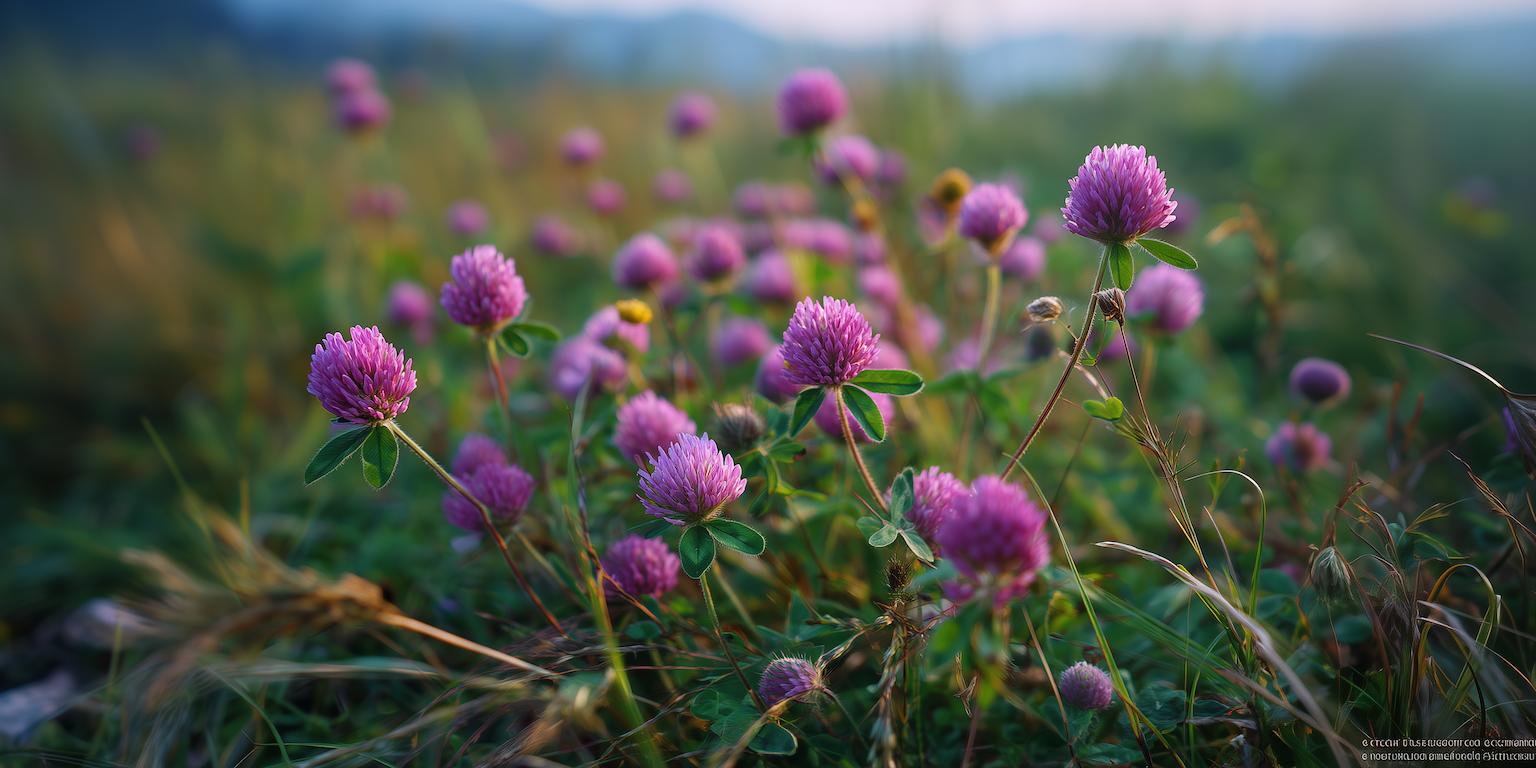
The Trifolium pratense, pure and in full growth (hero image)

Botanical cuisine

Red clover

Trifolium pratense

Why we love this botanical

Red clover yields a golden-yellow infusion with a floral, honeyed aroma and a fresh, green undertone. On the palate it is round yet light, with a velvety texture reminiscent of fresh hay, young pods and blooming meadows. The bitters remain modest, making the whole feel open and calm. It is a flower that does not play on volume, but on nuance, suppleness and a natural, expansive freshness.

In tea and herbal compositions, red clover often acts as a quiet connector. Its gentle floral character softens sharper herbs, while the green, lightly earthy notes add depth to fruit, leaf, and spice. It supports without overpowering and brings calm to blends with rose, lemon balm, nettle, or linden blossom. This makes it suitable as a middle layer: not so much a base or an accent, but an ingredient that provides structure, suppleness, and an even build-up of flavor.
Habitat & Origin

Red clover is originally native to Europe and West Asia and has since spread across many temperate regions. The plant grows in sunny meadows, field margins, and open grasslands, preferably on fairly nutrient-rich, well-drained soil that retains sufficient moisture. The spherical flower heads appear from late spring well into summer, when bees and other pollinators flock to them in large numbers. For infusions, the flowering tops are mainly harvested on dry days around full bloom and then air-dried. That careful drying preserves the soft, floral profile and tones down the raw green edge of freshly picked clover.

Active compounds

The dried blossoms contain, among other things, isoflavones such as biochanin A and formononetin, alongside flavonoids and mild tannins. Together they give red clover its rounded floral character, subtle green bitters and light, soft finish. During drying, the fresh-grassy character decreases and the profile becomes milder and more honey-like. Precisely because of this, in infusion the velvety texture and the calm, meadow-like aroma come through better.

Ayurvedic approach

Red clover does not belong to the core of classical Ayurvedic herbalism, but in contemporary interpretations it is often regarded as lightly cooling and mild in nature. From that approach, it aligns more with pitta and kapha than with a pronounced vata profile, mainly due to its floral, mild, and non-heating nature. In European herbal traditions, the flowering top was also valued in spring blends and light infusions, often as a seasonal herb in the transition from winter to spring.

Thermal energy (Virya) light cooling

Pitta

Balancing

Increasing Balancing

Effect: strong balancing

Vata

neutral

Increasing Balancing

Effect: neutral

Kapha

Balancing

Increasing Balancing

Effect: light balancing

Dosha’s & tea
Ayurveda

Tea Blog

Dosha’s & tea

What Ayurveda understands by Vata, Pitta and Kapha — and how that provides direction for tea.

Read the article

Flavour profile & Blending

Intensity

Strong

Accessibility

Accessible

Character

vegetal

Role in the blend

Balanced herb (10–20%): creates a harmonious foundation and supports the other flavours.

The indicated percentage refers to the approximate weight proportion of this herb within the total blend, but it can of course be adjusted to give the herb a more dominant or more subtle role.

Red clover combines beautifully with rose, elderflower, linden blossom and chamomile when a blend is meant to feel floral and rounded. With nettle, lemon balm or raspberry leaf it brings suppleness and a green middle layer. In small quantities it can also round out fruity compositions with hibiscus or apple, because its mild sweetness and light bitters smooth the transition between fresh and earthy notes.

An infusion of red clover pairs well with light cakes, honey pastries, fresh goat cheese, strawberries, apricots and desserts with vanilla or almond. The floral roundness complements creamy and nutty notes, while the green freshness gives fruit and soft cheeses more tension. It also works nicely alongside oat biscuits or a salad with young herbs, because the meadow-like character subtly returns in the dish.

More flavour details

Selection guide (aroma directions)

Intensity
4
Freshness
1
Citrus
0
Fruity
1
Floral
4
Spicy / Herbal
1
Earthy / Woody
2

Food pairing (structure)

Sweetness
4
Sourness
1
Bitterness
3
Astringency
1
Body
3
Aftertaste length
4
Sharpness / Pungency
0
Blending notes: vegetal (5/10)
Flavour appreciation
Taste

Tea Blog

Flavour appreciation

Learn to taste tea mindfully — from aroma and intensity to mouthfeel and food pairing.

Read the article

Precautions

Naturally contains plant phytoestrogens. Therefore best used with care during pregnancy or with hormone-sensitive conditions.

Experience Red clover

Discover the versatility of this botanical in our blends, or use it as the foundation for your own creation in our Blendstudio.


Contact

Reach us via chat
Chat WhatsApp
9am-6pm on working days
Reach us by email
E-mail contact@maisontisane.nl
Response usually the same working day
Reach us by phone
Call 040 – 240 5807
9am-6pm on working days

Create your own

Blendstudio Workshops

Inspiration

Botanicals Tea Blog

You can shop safely with us

You can shop safely with us (Webwinkel Keurmerk)

Pay securely with:

iDEAL VISA Mastercard American Express Riverty PayPal

Shopping Cart

( )

Your cart is empty

Total