Maison Tisane
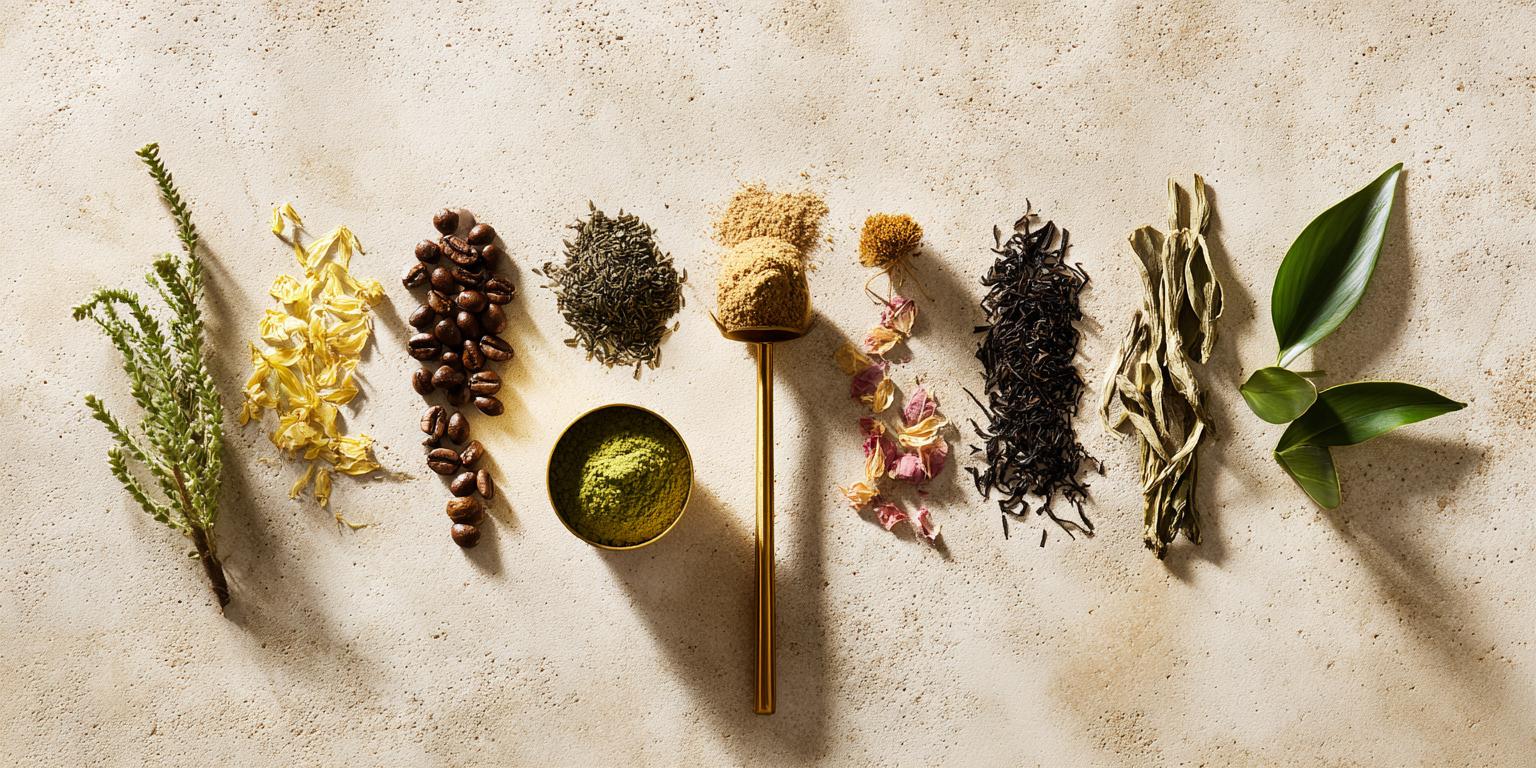
Caffeine explained (hero image)

Caffeine explained

Clear guidance to understand caffeine and choose calmly — from matcha to mint.

Caffeine in tea, matcha, coffee and infusions explained

The difference between tea and herbal infusions is that caffeine is the key point. In this article we compare different types of tea (white, green, oolong, black and matcha) with herbal infusions, and place them alongside coffee and espresso. You get a calm compass: where does caffeine come from, why does it vary per cup, and how do you choose consciously for each moment.

Caffeine seems simple: coffee = a lot, herbal tea = none. In practice, the pitfalls are in labels (rooibos is not tea), in form (you drink matcha as the leaf) and in preparation (dosage and steeping time determine the outcome). Once you understand that, you don’t have to guess: you can build your day with tea when you want focus, and switch to a botanical infusion when you want to come down more gently.

See it as a small ritual: one conscious choice, calmly made, and just enough energy for the moment.

Tea and infusions: where caffeine begins

Caffeine is a natural substance you mainly encounter in coffee and in real tea (made from the tea plant Camellia sinensis). The difference from a botanical infusion is therefore not subtle, but fundamental: tea naturally contains caffeine; herbal and flower infusions generally do not.

In everyday language, those words often get mixed up. “Herbal tea” can mean mint or chamomile, but also a blend that secretly still contains tea leaf. If you want to be mindful about caffeine, it helps to define those terms clearly.

Clearly: tea, tisane and infusion

  • Tea = everything from Camellia sinensis: white, green, oolong, black, pu-erh and also matcha. Contains caffeine.
  • Tisane / botanical infusion = herbs, flowers, leaves, seeds, roots (and for example rooibos). Naturally caffeine-free.
  • Blends = sometimes it’s an infusion, sometimes “tea with herbs.” When in doubt, look at the ingredients: does it list green/black tea, matcha or yerba mate? Then it contains caffeine.

Want to understand the distinction between tisane and tea a bit more deeply (origin, naming, why it often gets mixed up in shops)? Then Tisane or tea? is a nice deeper dive.


Caffeine per cup: a realistic range

Caffeine can’t be captured in a single number. Cup size, dosage, grind size (for coffee), leaf quality, temperature and steeping time really make a difference. See the values below as guidance: useful for comparing, not intended as exact science.

Espresso

± 50–80 mg per shot (about 25–35 ml). Small volume, high intensity per sip.

Coffee

± 80–160 mg per cup (200–250 ml). Filter and lungo/americano often come out higher due to the volume.

Black tea

± 40–70 mg per cup (200–250 ml). Stronger with more leaf and longer steeping time.

Green tea

± 20–45 mg per cup (200–250 ml). Often lighter, but a powerful Japanese style can come out higher.

Matcha

± 50–80 mg per serving (depending on grams). You drink the leaf, so it often feels more “concentrated.”

Botanical infusion

0 mg (naturally) as long as it’s pure herbs/botanicals. For blends with tea or mate: check ingredients.

Remember: tasting “strong” is not the same as “a lot of caffeine.” A smoky black tea can taste intense, while the caffeine per cup is still lower than a large mug of coffee.

And conversely: a gentle-looking tea can feel surprisingly “wakeful” if you use a lot of leaf or let it steep for a long time.

What determines caffeine in tea

If you know coffee, you already know this principle: the more you extract, the more caffeine you take with you. With tea it works the same way. The nice thing is that with a few small choices you can already steer a lot, without having to make your tea ritual complicated.

Three knobs that really make a difference

Dosage

More leaf = more caffeine. This is usually the most direct knob.

Time

Steeping longer gives more extraction. With tea bags (fine cut) this happens faster.

Temperature

Hotter water extracts faster. Especially with green tea, you can end up much gentler with a slightly lower temperature.

This also matters

  • Cut and shape: whole-leaf brews differently (and often more calmly) than “dust” in a bag.
  • Multiple infusions: with loose tea you can steep the same leaf multiple times. The caffeine per round usually decreases, but does not become zero.
  • How you drink: one espresso is quick. A pot of tea is often drunk more slowly. That can noticeably change your experience.

More about leaf versus bags (and why small particles “release” faster) you can read in Loose tea or bags.

Matcha: you drink the leaf

Matcha is a separate category, because you don’t just steep the tea leaf, you drink it. As a result, caffeine (and flavor) comes in more concentrated than with a regular cup of tea. It’s not “better” or “worse” — just a different rhythm.

Matcha and espresso: difference in rhythm

Espresso is compact and fast: one shot, short extraction, direct character.

  • High intensity per sip
  • Usually drunk faster
  • Logical as a “start button”

Matcha is creamy and green: you drink the leaf, often at a calm pace.

  • Concentrated flavor (umami, green)
  • Often comparable to espresso in caffeine order
  • More a ritual than a shot

If you’re sensitive to caffeine, matcha is usually not the most forgiving choice. If you love it: dose consciously (grams really make the difference here).

Infusions: flavor without caffeine

A botanical infusion is not a “second choice” next to tea. It’s a different genre: not built on caffeine, but on aroma, mouthfeel and layering from whole plants. Flowers give top notes, seeds build roundness, roots bring depth. And because there’s no caffeine curve in the way, an infusion often fits effortlessly into the late afternoon or evening.

Do you like to brew your infusions consistently and full? Then one fixed method helps (water just under boiling, room for botanicals, cover, enough time). We worked out that foundation in The infusion ritual.

Four caffeine-free directions

Fresh and clear

Minty, light, open. Lovely after a meal or if you want to keep your head “clean.”

Botanical: mint. Blend example: Digestive.

Warm and round

Spices, roots, a supporting body. Nice as an alternative to a second coffee.

Botanical: ginger. Blend example: Vata No 2.

Floral and soft

Soft florals, rounded, calm. A cup that doesn’t switch you “on.”

Botanical: chamomile or linden blossom. Blend example: Relax.

Herbal and green

Fresh-herbal with a bright finish. Pleasant if you want character, but no caffeine.

Botanical: tulsi. Blend example: Pitta No 2.

Depth is often in steeping time

With botanicals, the perfume comes quickly, but the body later. So give an infusion time, cover it, and taste after a few minutes. That’s not a rule, but an invitation: you’ll notice for yourself when the cup becomes “round.”

Curious why different plant parts steep differently (flower vs seed vs root)? In Plant parts we explain how to recognize that.

Frequently asked questions about caffeine

Is theine something different from caffeine

No. “Theine” is an old name you still often hear, but it refers to the same molecule: caffeine. What can differ is how you experience it, because tea is consumed differently (volume, pace) and because tea brings along more flavor compounds.

Does herbal tea contain caffeine

Herbs, flowers and rooibos naturally contain no caffeine. But: some “herbal tea” blends also contain tea leaf (or mate). When in doubt: check the ingredient list.

Is rooibos caffeine-free

Yes, rooibos is naturally caffeine-free. It’s often called “rooibos tea,” but botanically it’s an infusion, not tea from Camellia sinensis.

What about decaf

Decaf coffee or tea usually contains less caffeine, but often not completely zero. If you want to be very strict, a pure botanical infusion is the surest route.

See caffeine as part of your tableware, not as a judgment. Sometimes you want a cup that opens. Sometimes you want a cup that rounds off. Tea and infusions both give you a language to choose that — calmly, precisely, cup by cup.

Contact

Reach us via chat
Chat WhatsApp
9am-6pm on working days
Reach us by email
E-mail contact@maisontisane.nl
Response usually the same working day
Reach us by phone
Call 040 – 240 5807
9am-6pm on working days

Create your own

Blendstudio Workshops

Inspiration

Botanicals Tea Blog

You can shop safely with us

You can shop safely with us (Webwinkel Keurmerk)

Pay securely with:

iDEAL VISA Mastercard American Express Riverty PayPal

Shopping Cart

( )

Your cart is empty

Total