Maison Tisane
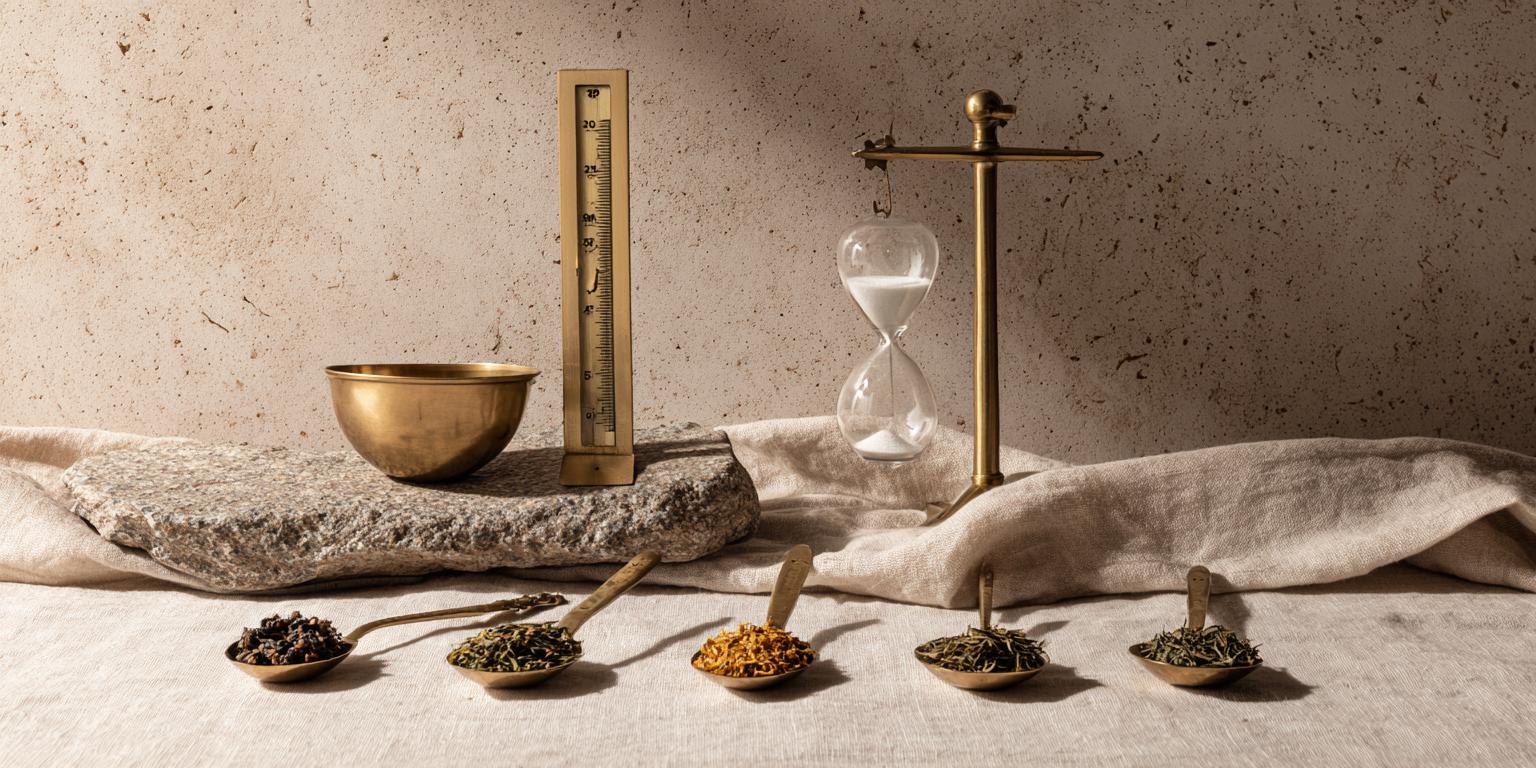
Preparation method by tea type (hero image)

Preparation method by tea type

From sencha to pu-erh — give each leaf the right heat and time.

Set per type: temperature, time and multiple infusions

Real tea is one leaf (Camellia sinensis), but because of different processing, each type calls for its own brewing method. Green and white are sensitive to water that is too hot; oolong and pu-erh can handle a lot of heat. In this guide, for each tea type you get a clear basic profile: water, dosage and time — plus how to adjust based on taste. At Maison Tisane we like to keep it precise, but never strict: you taste, we provide guidance.

A lot of tea is brewed at home with boiling water and one fixed steeping time. With green and white tea that more quickly causes bitterness; with oolong the cup stays flat if you use too little leaf; and with pu-erh you miss nuance if you skip the first infusion. If you understand three knobs — temperature, dosage and rhythm of infusions — the same tea suddenly becomes clearer and rounder.

Make the first infusion a tasting moment: smell, taste, adjust. Luxury lies in attention, cup by cup.

Why every type of tea requires a different brewing method

Green, white, oolong, black, pu-erh and yellow all come from the same plant (Camellia sinensis)—but they are processed differently. That processing (oxidized or not, rolled, pressed, roasted) determines how quickly flavor compounds are released and how sensitive the leaf is to heat. So with the same action you can make two completely different cups: one bright and soft, or one dry and bitter.

Dial 1

Temperature (lower for lighter tea types, higher with more oxidation)

Dial 2

Time (shorter for delicate leaf, longer for rolled or pressed tea)

Dial 3

Dosage (more leaf = more body, but intensifies faster)

The calmest way to brew better

  • Change only one variable at a time. First temperature, then time, only then dosage.
  • Always pour it all out. Don’t leave the leaf sitting in the water; that makes your cup astringent quickly.
  • Work with soft water (filtered or neutral bottled water) if your tea quickly turns dull or bitter.


Brewing chart by tea type

See these as starting points. Tea is always a interplay of leaf, harvest, water and your taste. If you take one habit from this chart: lower and shorter for green/white/yellow, hotter and a bit longer for oolong/black/pu-erh—and with oolong and pu-erh it pays to rinse.

Green tea

  • 60-70 °C (Japan) / 70-75 °C (China)
  • 45-60 sec, then +30 sec per infusion
  • 3-4 infusions are often possible

White tea

  • 85 °C
  • 2 min, then +30 sec per infusion
  • 2-3 infusions

Yellow tea

  • 80 °C
  • 1-2 min, then +1 min per infusion
  • 2-3 infusions

Oolong

  • 85 °C (light) / 95 °C (dark)
  • Rinse and brew 1-2 min, then +1 min
  • Up to 8-10 infusions with good leaf

Black tea

  • 100 °C
  • 2 min (delicate) to 4 min (strong)
  • Sometimes 1 extra infusion (+1-2 min)

Pu-erh

  • 95 °C
  • Rinse, brew 2 min, then +1 min
  • 3-4 infusions as a calm base

Dosing without stress

Do you prefer working with grams rather than “spoons”? That’s often more consistent, because the shape of the leaf (rolled, broken, airy) affects the volume measure. A nice start: 2 grams per 250 ml for green/black, 2.5-3 grams for white/yellow, and 3 grams for oolong/pu-erh. If you just use a teaspoon: keep it practical—and taste.

Handy tools

Light tea types: green, white and yellow

With light tea types, you mainly want to avoid one thing: water that’s too hot. The leaf then releases bitterness faster and the fresh, floral notes fade into the background. Brew a bit cooler and repeat in multiple short infusions. That doesn’t feel “complicated”; it’s simply a calm way to build depth.

Green tea

Green is the most temperature-sensitive. Japanese green tea often likes cooler water than Chinese green tea.

  • Start cool: 60-70 °C (Japan) or 70-75 °C (China).
  • Short: 45-60 sec, then a bit longer per infusion.
  • Pour out completely is essential.

Try it with Sencha Premium, Lung Ching or Mao Feng—three styles, one lesson: softness in temperature.

White tea

White tea is subtle, but often surprisingly forgiving. Slightly warmer water gives more body without immediately becoming harsh.

  • 85 °C as a calm standard.
  • 2 min first infusion; then +30 sec each time.
  • More leaf is fine (the leaves are often large and airy).

Examples: Bai Mu Dan or Jasmine Silverneedle—lovely if you like light, floral and clean.

Yellow tea

Yellow tea sits in character between green and white. Brew it just a bit warmer than green tea, with gentle, rounded timing.

  • 80 °C as a start.
  • 1-2 min, then +1 min per infusion.
  • 2-3 infusions often work beautifully.

If you have it at home: Yellow Dragon is a nice way to taste what “soft” can mean without it becoming light.

Temperature without a thermometer

No temperature kettle? Let boiled water rest for a moment or pour it once into a cooler pitcher. That cools quickly and gives you more control. Do you taste bitterness in green? Next time brew 5 °C lower or 15 seconds shorter. Small steps are enough.

More oxidation: oolong and black tea

Oolong and black tea can handle more heat. Still, the difference is in rhythm: oolong rewards you with many infusions and layers; black tea is “done” faster and mainly asks you not to steep too long.

Oolong

Oolong is often rolled: the leaf opens slowly. That’s why preheating and (with many oolongs) a short rinse helps to wake the leaf up.

  • 85 °C for light oolong; 95 °C for dark/roasted.
  • Rinse briefly (water on, pour off immediately) and then brew 1-2 min.
  • Then +1 min per infusion; good oolong can stay beautiful 8-10 times.

Taste the difference between Tie Guan Yin (fresher) and Da Hong Pao (deeper).

Black tea

Black is fully oxidized and likes hot water. The finesse is usually in time: too long quickly makes it dry.

  • 100 °C (fully boiling) is fine.
  • 2 min for light styles (such as Darjeeling); 3-4 min for stronger leaf.
  • Whole leaf can sometimes handle a second round: then add 1-2 min.

Examples: Golden Yunnan, Assam and Darjeeling First Flush.

Pu-erh: rinse, open up, deepen

Pu-erh (often pressed) behaves differently than loose leaves. The leaf needs time to relax. A short rinse helps: not as a “rule”, but as a practical tool to let the leaf open evenly.

Starting point

95 °C · 2 min · then +1 min per infusion

Count on 3-4 infusions as a calm base. Do you have a nice, loose pu-erh or a well-pressed cake? Then you can often keep going longer.

Rhythm

  1. Preheat your pot or glass briefly.
  2. Rinse briefly: water on, pour off immediately.
  3. Pour again and let it steep calmly.
  4. Pour out completely—and go a bit longer for the next round.

If you want to taste this type: Pu-Erh Mannong nicely shows how a tea can change character per infusion.

Two brewing styles that always work

You can brew almost any tea in two ways: Western (one larger cup) or gongfu (many small infusions). Neither is “better”. The question is: do you want convenience, or do you want to follow the tea layer by layer?

Western brewing (easy and consistent)

  • 250 ml water in a pot or large glass.
  • 2-3 g tea (adjust per tea type with the brewing chart above).
  • Steep according to the guideline, pour out completely and taste.
  • Want a second round? Add time, not necessarily more leaf.

Tip: if you use loose tea but sometimes want speed, also read Loose tea or bags—without shaming, but with flavor logic.

Gongfu brewing (many infusions, lots of nuance)

  • Work with a small pot or gaiwan (80-120 ml).
  • Use more leaf (e.g. 4-6 g per 100 ml) and brew short.
  • Start with 10-20 sec, go a bit longer each round.
  • Perfect for oolong and pu-erh, also lovely with white tea.

It almost feels like a tasting session: each round is a small shift. You don’t have to “know” anything about it—just follow along.

Contact

Reach us via chat
Chat WhatsApp
9am-6pm on working days
Reach us by email
E-mail contact@maisontisane.nl
Response usually the same working day
Reach us by phone
Call 040 – 240 5807
9am-6pm on working days

Create your own

Blendstudio Workshops

Inspiration

Botanicals Tea Blog

You can shop safely with us

You can shop safely with us (Webwinkel Keurmerk)

Pay securely with:

iDEAL VISA Mastercard American Express Riverty PayPal

Shopping Cart

( )

Your cart is empty

Total

Shared cart

Someone has shared a cart with you. Would you like to add these products to your cart?

Total