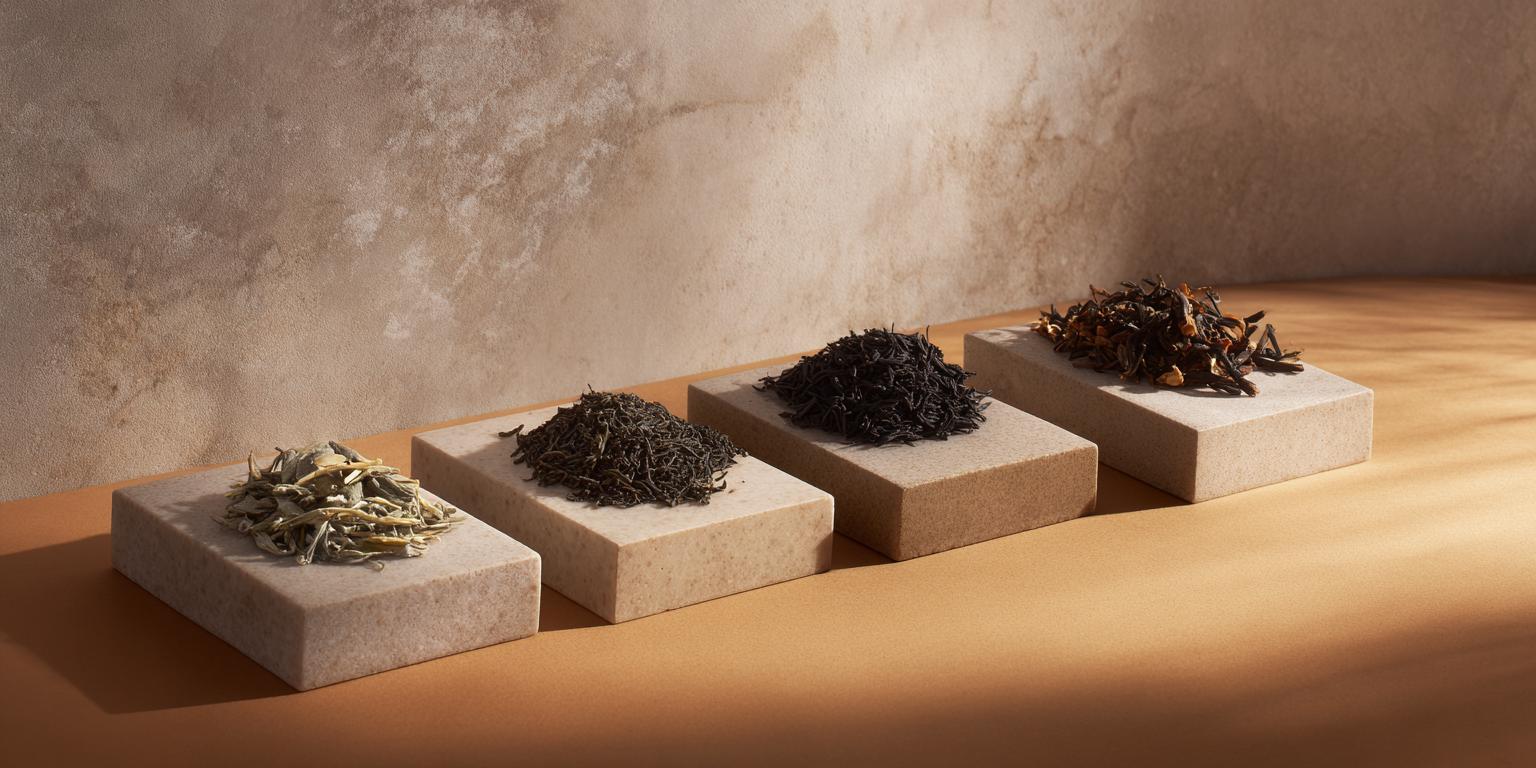

Four lines, one plant
All our tea lines start from the same source: Camellia sinensis. White, green, oolong, black and pu-erh tea are not different plants, but different choices in picking and processing. That’s why we don’t organize by “type,” but by experience: from familiar and flavor-driven to contextual and deepening.
Why the same plant can still taste so different
Picking & leaf
Buds, young leaves, or more mature leaves create a different mouthfeel: from light and floral elegance to more body and depth.
Oxidation & heating
More or less oxidation, and the way of heating (steaming, pan-firing, roasting) steer the direction: fresh and green, nutty, honeyed, or darker and rounder.
Shape & processing
Rolling, twisting, pearling: it determines how quickly a leaf opens in the water and how layered an infusion builds.
Aging & tradition
Some styles (such as pu-erh or certain roasts) become more interesting with time. Then context becomes part of the flavor.
Not a ranking, but a route
Familiar, Discovery, Expression and Connaisseur are not “better or worse.” They are four ways tea can fit a moment: sometimes you want comfort, sometimes you want to discover, sometimes you want to taste with focus. You can switch by day, by season, and by table.