Maison Tisane
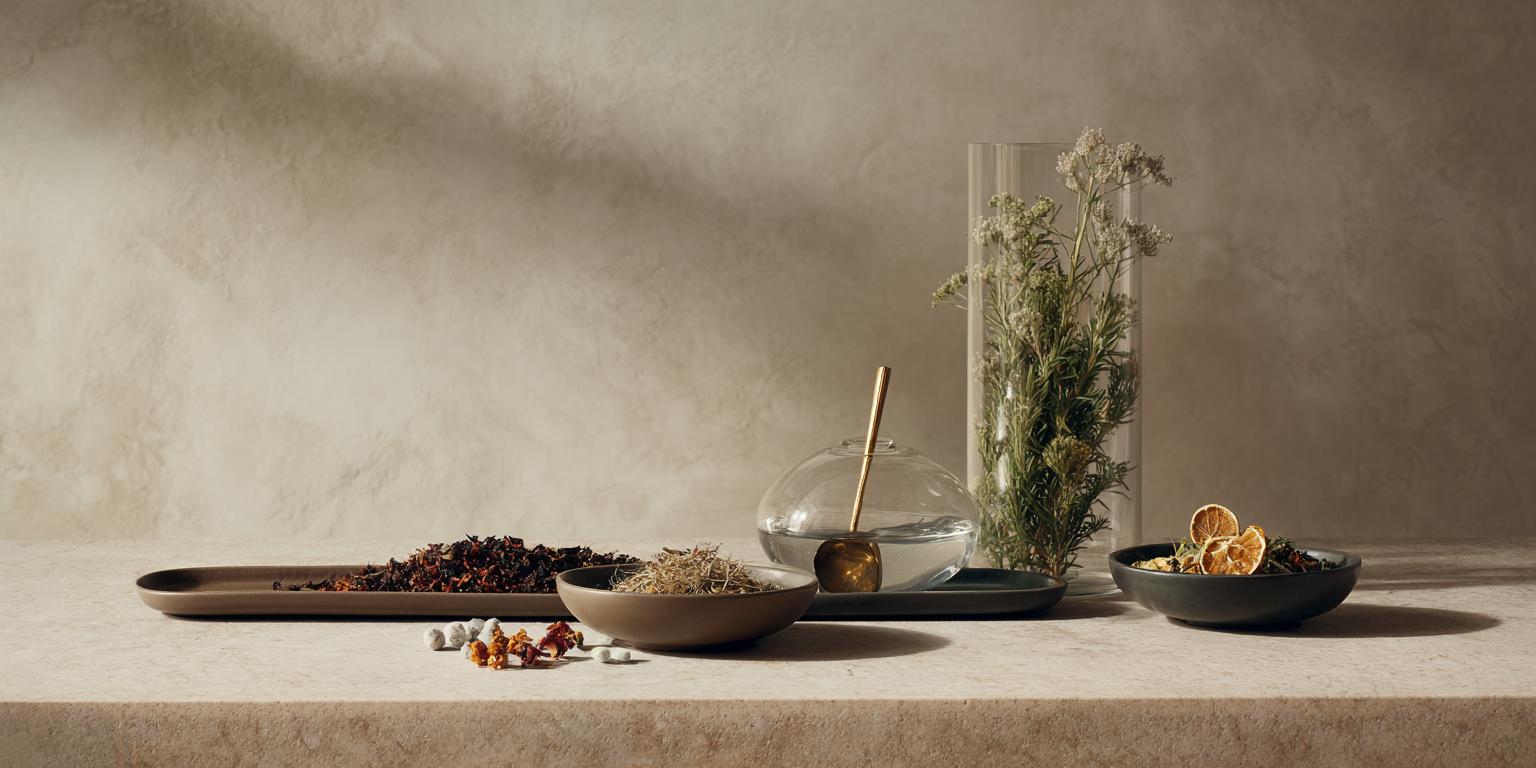
Designing a blend (hero image)

Designing a blend

A clear layering model for your own blend: from base to top note.

Blend studio: this is how you put together your perfect blend yourself

Creating your own blend doesn’t start with a long list of ingredients, but with a clear structure. With base, heart and top notes you build, layer by layer, a flavor that works. You don’t have to weigh anything at home: you choose and refine in the Blendstudio, we blend carefully and send your blend to your home. That way it stays creative and feasible, even without prior knowledge.

Start with one flavor direction and then build layer by layer. The pitfalls are too many flavors at once, dosing everything equally heavily and choosing based only on aroma. With the layering model you keep your blend recognizable and you can make targeted adjustments.'

Taste each layer separately, and only continue when the previous one is right. That is the small ritual behind a blend with direction.

Blend architecture: how to design in layers

A good blend never feels like “everything at once”. You first taste a base that carries, then a heart with character, and only then do the lift and the finish come. In the Blendstudio we translate your choices into a composition that works in infusion and also stays consistent with every jar. So you don’t have to blend at home: you design the direction, we build the blend and send it to you.

Layer 1

Base (body and support)

The layer that “holds” your blend. Think of round, soft botanicals or tea that doesn’t overpower the rest.

Layer 2

Heart (character and direction)

This is where the profile emerges: floral, fresh, spicy, green, earthy. This layer determines who your blend is.

Layer 3

Lift (top notes)

The first impression: citrus, mint, aromatic herbs. A lot of impact, so dose subtly.

Layer 4

Finish (detail and mouthfeel)

What lingers: a soft sweetness, a spicy echo, a floral veil, a clean close.

Rule of thumb for ratios (as a starting point, not a law): base 50–70%, heart 20–40%, lift 5–15%, finish 0–10%. In the Blendstudio we adjust this for cut size, extraction and balance.

Two choices that immediately bring calm

  • Choose the moment first (morning, after eating, evening, focus, relaxation) and only then ingredients. That prevents “a cupboard full of ideas”.
  • Work with layers instead of a long list. A blend with 5–7 botanicals can be more layered than one with 14.


1) Start with your intention

Your intention isn’t a “goal” in big words. It’s a practical choice: what should this blend be in your day? A gentle start, something light after eating, a spicy warmth, or rather a fresh openness. If you have that clear, choosing becomes easier.

Three questions that guide your blend

  1. When do you like to drink it most?
  2. What do you want to taste: fresh, floral, spicy, round, green, earthy?
  3. How intense can it be: very soft, medium, or pronounced?

Flavor compass: cool or warm

Many people intuitively choose “cooling” or “warming” in character (not in temperature). That helps especially with seasons and rhythm. Want to refine that compass? Read Cooling or warming?

2) Choose a base that carries

The base is the floor under your blend. If it’s too thin, everything feels “loose”; if it’s too dominant, you won’t taste nuance. In the Blendstudio we also look at brewing behavior: some botanicals give aroma quickly but little body, others slowly build mouthfeel.

Base ideas (choose one direction)

Soft and round

For example chamomile, linden blossom or rooibos.

Fresh and light

For example lemon verbena or lemon balm.

Spicy and supportive

For example fennel seed, coriander seed or cardamom.

Unsure between tisane and real tea? A blend can (depending on what you want) be fully botanical or be built around Camellia sinensis. The flavor difference is big. Read Tisane or tea?

3) Build the heart

The heart is where your blend becomes recognizable. Here, preferably choose 2 to 4 botanicals that together tell one story. Think in categories: floral, green, spicy, soft-sweet, citrus, earthy. And pay attention to plant parts: flowers behave differently than seeds and roots. Plant parts in botanicals helps you choose with more precision.

Three routes that almost always work

What you’d rather avoid here

  • Too many “leading roles”: five pronounced botanicals at once makes the profile diffuse.
  • One-sidedness: only flower or only citrus can be beautiful, but often requires a smart base for body.
  • Unintended sweetness: for example from a lot of licorice. Sometimes perfect, sometimes too dominant.

In the Blendstudio we discuss these kinds of preferences explicitly, so your blend stays true to your taste.

4) Top notes and finish

Top notes are tempting: they immediately smell “finished”. But precisely for that reason you dose them small. See it as perfumery: a good top is light and precise, not loud. The finish is then that small detail that lets your cup end elegantly.

Top notes: small, clear, focused

Finish: rounding or a clean ending

  • Rounder: a bit more seed spices (e.g. fennel seed) or a soft floral layer.
  • Cleaner: greener and lighter (e.g. lemon verbena), with fewer “sweet” elements.
  • Fresher: a subtle mint or citrus lift, without extra herbal warmth.

A simple balance rule

If your nose promises a lot, but the taste stays thin: add body (base). If the taste is round, but the cup feels heavy: add lift (top notes). If everything is present but “messy”: remove one leading role.

Balance check: taste like a blender

Even without blending at home you can become surprisingly precise in tasting. It’s mainly about language: knowing what you mean when you say “too sharp”, “too flat” or “too sweet”. If you enjoy training this, Taste appreciation is a nice deepening.

Taste check in 60 seconds

  1. Nose: what is the first association (citrus, flower, spice, green, earthy)?
  2. First sip: is there flavor right away, or does it come later?
  3. Middle: does it feel round (body) or light (transparent)?
  4. End: does something linger (finish) and is that pleasant?
  5. Tension: is there a “counter-color” (e.g. fresh versus round) that makes it interesting?

Translate your feeling into words

  • Too sharp = often too much lift (mint/citrus) or too little base.
  • Too flat = often too little heart (character) or too little tension.
  • Too sweet = often too many round elements at once (e.g. licorice + seeds + fruity).
  • Too heavy = often too much “depth” without a fresh opening.

Tip: write down just one sentence

A blend often comes from small corrections. One good sentence is enough: “floral but fresher”, “spicy but softer”, “less sweet, cleaner ending”. Bring that sentence to the Blendstudio.

Contact

Reach us via chat
Chat WhatsApp
9am-6pm on working days
Reach us by email
E-mail contact@maisontisane.nl
Response usually the same working day
Reach us by phone
Call 040 – 240 5807
9am-6pm on working days

Create your own

Blendstudio Workshops

Inspiration

Botanicals Tea Blog

You can shop safely with us

You can shop safely with us (Webwinkel Keurmerk)

Pay securely with:

iDEAL VISA Mastercard American Express Riverty PayPal

Shopping Cart

( )

Your cart is empty

Total