Maison Tisane
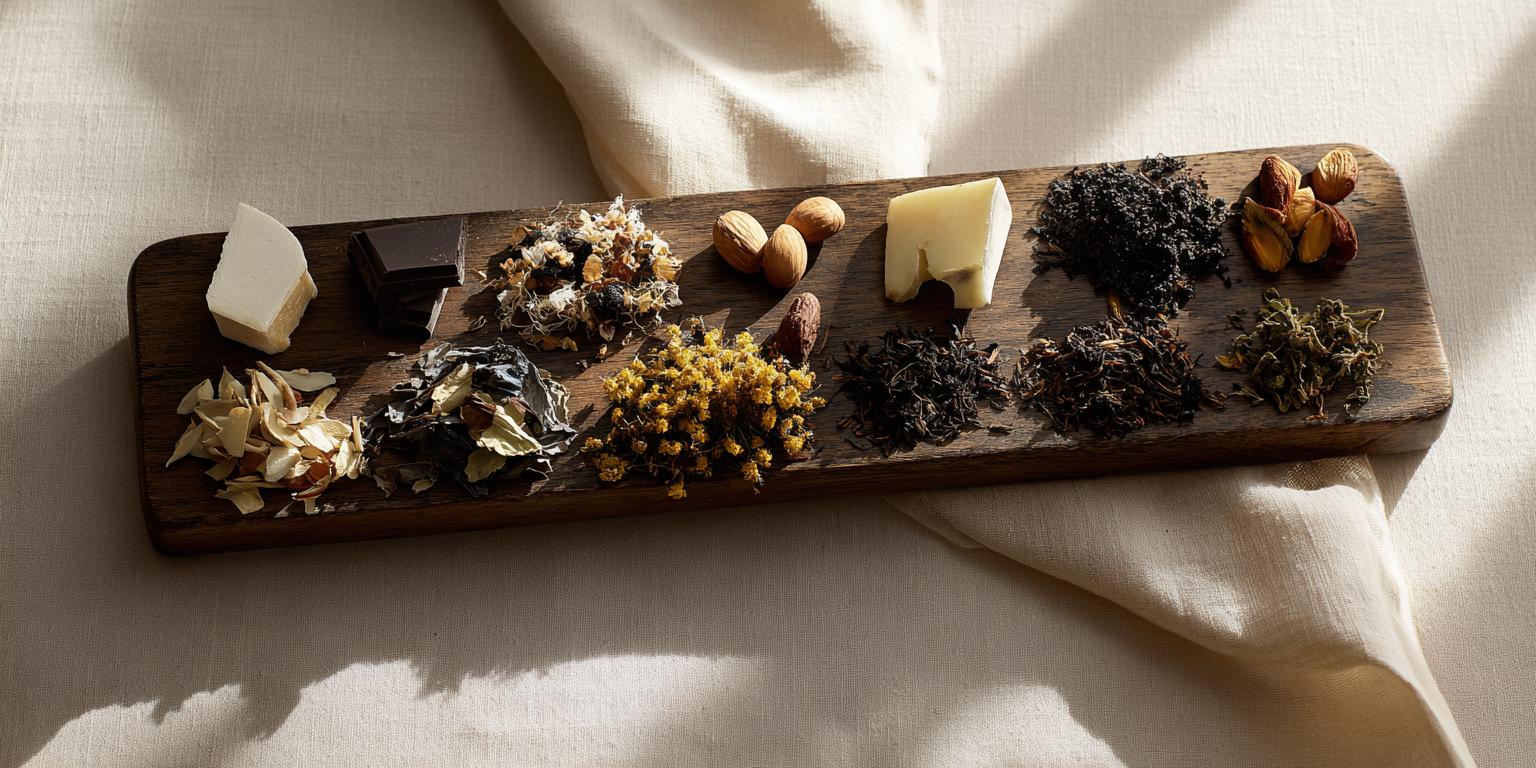
Food pairing with tea (hero image)

Food pairing with tea

Practical tasting and pairing — this is how you match botanical infusions and real tea with sweet, savory and cheese.

Tea and food: food pairing with botanicals and real tea

Food pairing with tea is not a trick; it is attention to aroma, body and bitterness alongside your plate. In this guide you will learn to combine botanicals and Camellia sinensis tea with sweet, savory, cheese and chocolate, without the cup becoming harsh or flat. You will get a few fixed principles and examples that work at home and in hospitality. Why this works: tea behaves as a drink and as a spice, and can lift or soften flavors if you choose the balance well.

More often than you think, pairing goes wrong because the tea is brewed too strong or too hot, because the dish is sweeter than the tea can handle, or because you match only on aroma and not on mouthfeel. If you pay attention to intensity, texture (fatty, creamy, crunchy) and aroma direction (citrus, floral, roasted, spicy), combinations suddenly fall logically into place.

First sit calmly, taste one sip neat, and only then take a bite. In that small order lies the ritual: attention, contrast, and a cup that moves along with the moment.

Food pairing with tea in three principles

Food pairing with tea is the same game as with wine, but gentler: you’re not looking for a perfect rule, you’re looking for balance. Tea can make a bite lighter, lift aromas, or instead give a long, calm finish. And because you determine the brewing strength yourself, you have an extra knob to turn.

1) Intensity

Match weight with weight. Delicate food calls for a delicate cup. Rich, fatty, or roasted food can actually carry a sturdier tea.

2) Bridge or contrast

Bridge: share aromas (citrus with citrus, flowers with fruit). Contrast: let tea “cleanse” (green with fat, mint with creamy).

3) Texture

Tannins (dryness) love fat. Sweetness mutes bitterness, so you can often brew a bit stronger there.

A simple start that’s almost always right

First choose one “main line” on your plate (citrus, smoke, flowers, spices, cacao) and let your tea either mirror that line, or soften it. Once you taste that, food pairing suddenly becomes very practical.


Botanicals or real tea: what changes in pairing

With botanicals (tisanes) you mainly work with fragrance, roundness, and herbal layering. With real tea (Camellia sinensis) you also get structure: umami, tannins, sometimes a light bitter edge. That’s not “better or worse”; it’s simply a different instrument. If you want the difference clearly: What is a tisane? is a great foundation, and taste appreciation helps you taste more purposefully.

When botanicals often land most beautifully

  • With desserts with fruit, vanilla, honey, or creaminess (aromas connect easily).
  • With light dishes where you don’t want tannins (salads, soft cheeses, delicate patisserie).
  • If you want a long, gentle infusion that eats along calmly, without your cup becoming “hard”.

Think of linden blossom, chamomile, rose petals, lemon verbena, or something spicy like cardamom.

When real tea is actually an advantage

  • With fat and umami (cheese, mushrooms, roasted notes): tannins and roast “cut” through nicely.
  • With savory (broth, roasted vegetables, barbecue): tea can work like a quiet sauce.
  • If you want a clear beginning and end in flavor: first sip, clean finish, next bite.

For example, look at Sencha for green and crisp, Houjicha for roasted and soft, or Golden Yunnan for rounded depth.

Brewing strength is your secret pairing knob

The same tea can work totally differently with the same dish, purely through extraction. With sweet, you often brew a bit stronger (otherwise the tea disappears). With delicate food, you brew a bit lighter (otherwise the tea takes over). If you want to work consistently: dose with a fixed spoon, brew in a roomy pot, and use a fine sieve. Our brewing guide helps you with that, as do a tea strainer and a glass pot where you can calmly watch the infusion open up.

Flavor families that almost always work

Once you learn to think in “families,” food pairing becomes surprisingly simple. Below are combinations you can use almost anywhere. Pick one, brew calmly, and taste what happens.

Fresh and green

For dishes with citrus, green herbs, sea, and light acids. This family often makes a bite clearer.

Tea: Sencha, Lung Ching

Botanicals: lemon verbena, lemongrass, mint

Goes with: goat cheese, ceviche, salad with citrus, green asparagus, sushi-like flavors.

Floral and soft

For light sweetness, fruit, cream, and patisserie. Here you mainly want to connect, not contrast.

Tea: Bai Mu Dan, Jasmin Silverneedle

Botanicals: linden blossom, chamomile, rose petals

Goes with: madeleines, yogurt with honey, pear, raspberry, light cake, panna cotta.

Roasted and nutty

For everything that comes out of the oven: toast, nuts, caramel, mushrooms. Roasted notes quickly make it “round”.

Tea: Houjicha, Da Hong Pao

Botanicals: chicory root, rooibos

Goes with: roasted pumpkin, hazelnut, mushroom risotto, caramel desserts, dark cookies.

Spicy and warm

For spices, apple, cinnamon, spice cake, and dark chocolate. Think: comfort, but refined.

Tea: Assam, Golden Yunnan

Botanicals: ginger, cinnamon, cardamom

Goes with: apple pie, spice cake, speculaas, chai-like desserts, dark chocolate.

A ready-made botanical interpretation of this profile is Vata No 2 (ginger, cinnamon, anise, and coriander).

Earthy and umami

For broth, mushroom, miso, hard cheese, and everything with depth. Here you want structure, not perfume.

Tea: Pu-Erh, Tie Guan Yin

Botanicals: tulsi, nettle leaf

Goes with: mushrooms, miso, roasted root vegetables, Comté-like cheeses, nutty broths.

Smoky and savory

For barbecue, grilled, smoked, and dark umami. Dosage is everything here: preferably a bit less leaf, a bit more nuance.

Tea: Smokey Lapsang Souchong

Botanicals: rosemary, thyme, orange peel

Goes with: smoked salmon, mushrooms from the grill, barbecue sauce, aged cheese, charcuterie.

Pairing by moment: from breakfast to dessert

If you don’t want to think in theory: choose a moment, choose your plate, and pick one cup that carries the moment. Below you’ll find combinations that work easily in everyday life.

Breakfast

Goes with: yogurt and fruit, buttery viennoiserie, toast with honey, soft granola.

Tip: brew breakfast tea preferably a bit lighter than you’re used to. Your breakfast often already has a lot of “body”.

Lunch

Goes with: salads, soup, herb sandwiches, light cheeses.

  • Real tea: Sencha Gyokuro with green and umami, or Tie Guan Yin with something creamy.
  • Botanicals: minty and bright often works well after a savory bite; think of Digestive as a botanical “fresh line”.

Tip: with salad with acid (citrus/vinegar), tea often works more beautifully if you brew at a slightly lower temperature and don’t let it steep too long.

Dinner

Goes with: roasted vegetables, mushrooms, stew, spiced dishes.

  • Real tea: Houjicha with roasted, Pu-Erh with earthy/umami.
  • Botanicals: spicy and warm (ginger/cinnamon) with stew and winter flavors, or instead fresh (mint/lemon) with spicy food.

Tip: feel free to serve tea at dinner in a smaller cup and top up again later. That way the pairing stays clear instead of “a lot”.

Dessert and cheese

Goes with: chocolate, caramel, fruit dessert, cheese board.

Tip: brew dessert tea just a bit stronger, or choose a roasted profile. That way your cup won’t disappear next to sugar.

Also lovely: tea as a non-alcoholic aperitif

Want that “first sip” moment without alcohol? Brew something fresh (green or citrus botanicals), let it cool, and serve in a wine glass with lots of ice. A splash of sparkling water is possible, but not necessary. The ritual is in the aroma as you pour and the clean finish with the first bite.

Mini ritual: taste a pairing in four steps

You don’t have to be a sommelier to pair well. You just have to taste a little more slowly. This small ritual makes combinations immediately clear.

How to do it

  1. Smell the dry leaf (or your botanical blend) and choose one word: citrus, floral, roasted, spicy, earthy.
  2. Take a small bite and chew slowly. Pay attention: where is the weight? On the tip of the tongue (sweet), the side (sour), the back (bitter/roast), or in your mouthfeel (fat/creamy)?
  3. Take a sip of tea and wait one breath. Does the bite become lighter, rounder, fresher? Or does something clash?
  4. Adjust with one knob: steep a bit shorter, slightly less hot water, or dose a bit more. Change only one variable at a time.

Make it tangible with a mini note

Afterwards, write down one sentence, such as: “Houjicha + caramel = calmer sweetness” or “Sencha + goat cheese = cleaner”. This is exactly how you build taste memory. If you want to go deeper: here you’ll find our way of tasting.

Contact

Reach us via chat
Chat WhatsApp
9am-6pm on working days
Reach us by email
E-mail contact@maisontisane.nl
Response usually the same working day
Reach us by phone
Call 040 – 240 5807
9am-6pm on working days

Create your own

Blendstudio Workshops

Inspiration

Botanicals Tea Blog

You can shop safely with us

You can shop safely with us (Webwinkel Keurmerk)

Pay securely with:

iDEAL VISA Mastercard American Express Riverty PayPal

Shopping Cart

( )

Your cart is empty

Total

Shared cart

Someone has shared a cart with you. Would you like to add these products to your cart?

Total